Goodness me it's been hard keeping this one quiet. We've been very, very lucky at Creative Concern HQ to be working with the Manchester International Festival on a proposed vertical farm, right here in Manchester, housed within a transformed office block.
We've worked on the feasibility with sustainable food expert Debbie Ellen, Capital Relations and, naturally, our brilliant friends at Urbed.
More details eventually... but for now, here's Urbed's visual schematic as a 'taster' and I suggest you all book your tickets for the awesome Dickson Despommier!
Showing posts with label Urbanism and Place Branding. Show all posts
Thursday, 17 March 2011
Tuesday, 15 February 2011
Robo Rainbow
This is lovely... a man, a bike and some very clever spray cans.
robo-rainbow from mudlevel on Vimeo.
Sunday, 13 February 2011
We are each of us tourists in the original modern city
GM tourism review
A couple of years ago, I helped Visit Manchester - Greater Manchester's Tourist Board - write and publish a tourism strategy for the city region which I hope set out some of the critical challenges and opportunities that existed for what those in the know call the 'visitor economy' across our wonderful ten boroughs.
We're now busy, again with Visit Manchester, reviewing that strategy and doing a bit of an update report on how the sector has been doing.
The headlines? Well, the sector is holding its own with visitor numbers up a little over the last couple of years, but I think it would be fair to say that some of our core challenges, such as a diversification of the nighttime economy, still stand. Email me if you have thoughts, or post a comment.
And as an aside, I thought I'd include a quick comment on why I think this is so earth-shatteringly important.
First of all, I am passionate about a vibrant visitor economy being a fundamental part of creating a sustainable city. If we are inspired and are acquiring new knowledge and new experiences, then we are, for my money, more likely to make the connections and take the actions necessary to create a better future for our children.
Second thing - no surprise here - is climate change related. If we make our tourism product utterly irresistible and of the highest quality, then more of us will opt for 'staycations' and will avoid barfing out vast amounts of carbon going on mini-breaks and piss-ups in far flung locales.
Third - Manchester. Getting the experience of our city right is critical if we want to be a player. We want talented graduates to stay here? We need to be vibrant. We want people to invest here? We need to be vibrant. We want the jaded and over-indebted souls in the South East and London to do the smart thing and move up to the Original Modern City? We need to be vibrant, and different, and good.
So that's why I care about this stuff... but back to the review... comments if you have them are gratefully received.
View more presentations from Creative Concern.
We're now busy, again with Visit Manchester, reviewing that strategy and doing a bit of an update report on how the sector has been doing.
The headlines? Well, the sector is holding its own with visitor numbers up a little over the last couple of years, but I think it would be fair to say that some of our core challenges, such as a diversification of the nighttime economy, still stand. Email me if you have thoughts, or post a comment.
And as an aside, I thought I'd include a quick comment on why I think this is so earth-shatteringly important.
First of all, I am passionate about a vibrant visitor economy being a fundamental part of creating a sustainable city. If we are inspired and are acquiring new knowledge and new experiences, then we are, for my money, more likely to make the connections and take the actions necessary to create a better future for our children.
Second thing - no surprise here - is climate change related. If we make our tourism product utterly irresistible and of the highest quality, then more of us will opt for 'staycations' and will avoid barfing out vast amounts of carbon going on mini-breaks and piss-ups in far flung locales.
Third - Manchester. Getting the experience of our city right is critical if we want to be a player. We want talented graduates to stay here? We need to be vibrant. We want people to invest here? We need to be vibrant. We want the jaded and over-indebted souls in the South East and London to do the smart thing and move up to the Original Modern City? We need to be vibrant, and different, and good.
So that's why I care about this stuff... but back to the review... comments if you have them are gratefully received.
Tuesday, 12 October 2010
What is Creative Concern?
I've recently been called upon to explain myself. Quite right too. Embedded below is a trolley dash through the chaos that is my head. It starts with a bit about why and how we do what we do at Creative Concern, before moving onto some of our bits of work 'out there' in the real world that we love so much.
As is ever the case, it's an evolving pitch so if there are any bits that could do with improvement, please send your thoughts in now on the back of stamped addressed envelope.
Saturday, 11 September 2010
The Forests of TAFKAR*
I've been working on a plan, recently, to get some more trees in the ground. Nothing new there to anyone who has visited this blog before, but I thought it was time for an update.
I chair the Northwest Forestry Framework (soon to change it's name to something more in keeping with the political zeitgeist, but more on that another time) and have been working with a whole host of people, both in the Northwest but also in the national offices of the Forestry Commission, to put forward several areas in the Northwest as possible pilot areas for a major national push on woodland creation.
As an area of England with a level of woodland cover well below the national average, there is scope and opportunity for large scale tree planting and development right across Cumbria, Lancashire, Greater Manchester, Cheshire and Merseyside. When you look at the statistics, we are poorly served in these areas when it comes to woodlands.
The good news is that each of these areas has also developed clever and canny new models for woodland creation that deliver multiple benefits and move beyond traditional public sector investment models towards partnerships with business and the voluntary sector.
It's all very, 'Big Society'.
Show me the money
It all sounds very motherhood and apple pie, but who is going to pay? There are a number of existing or planned investment models across the Northwest which warrant further development and replication elsewhere. These include:
• Woodland planting as a key aspect of PFI (Public Finance Initiative) contracts and, specifically, waste management strategies;
• Working with large-scale developers to create an attractive setting for investment and adding value to land-based asset portfolios;
• Practical business partnerships providing improved local area ‘image', biomass resources or climate change adaptation;
• Woodland or green infrastructure bonds, where investors can support woodland creation by investing in a bond that provides non-fiscal benefits in lieu of interest payments as part of a CSR or sustainability strategy;
• Developing a suite of woodland creation opportunities alongside community interest levies/section 106 arrangements where developers support environmental works as a condition of their planning consents; and
• Integrated land use planning to maintain and improve water quality.
• Landscape-scale, economically-linked programmes to aid recovery and local economic resilience.
Some of the above options sound a little jargon laden, but they have the potential to help us get some trees in the ground, and that's what I care about. Each of these investment models is either already in play across one of our counties or city regions, or is ready to be developed by one or more partners.
Breaking down barriers
From the discussions we've been having so far, these partners are ready to start delivering woodland creation, on the ground, if certain barriers to progress can be removed. These barriers include:
• The ‘Hope value' attached to under-utilised land and the misplaced notion that new woodlands permanently remove large areas from possible future development;
• More flexible, short to medium term land use deals and frameworks that will allow the notion of ‘temporary' woodland to be pursued;
• Clear signals on the future of carbon pricing and accounting in relation to woodland creation;
• The lack of a mechanism for business to report on the carbon benefits of woodland creation programmes as part of their net greenhouse gas emissions; and
• The consideration of effective tax regimes to encourage investment in new planting in areas of need as a way for business to play a part in 'big society' programmes.
So the exciting thing is that if we bash down a few barriers, win over some hearts and minds, and pull our fingers out, the partners in the Northwest Forestry Forum are ready to begin work piloting a new wave of woodland creation using innovative funding and delivery models such as these.
More trees, in the ground, delivering a huge range of benefits.
And the track record for delivery across the region is solid and impressive, with the Community Forests (e.g. Mersey Forest and Red Rose Forest) having already planted 12 million trees and millions more having been planted through the Forestry Commission's Capital Modernisation Fund and Newlands programme.
Here are some more tangible examples of where can start planting.
Real life example - Mersey Belt
There is an immediate opportunity for an ‘Adapting the Landscape' pilot across what has been coined the ‘Atlantic Gateway', connecting the twin city regions of Greater Manchester and Merseyside with the Northern areas of Cheshire.
Such a pilot would be focused on woodland creation in and around key physical development sites and along transport corridors; on productive forestry including biomass; on leisure, recreation and the ‘visitor economy'.
Funding can be drawn from business through receipts from soils deposition, community interest levies, Section 106 agreements, through an easing of planning constraints if the creation of greenspace is assured and possible short-term amnesties against business tax.
Delivery partners would include large development businesses in the area, as well as the key Local Enterprise Partnerships and the voluntary sector in the form of community forests and Groundwork.
Real life example - Lancashire
In Lancashire there is already an innovative model for woodland creation in the form of the county's ‘Woodlands from Waste' programme linked to a soon to be commissioned, 25 year, £2 billion Waste PFI.
A partnership of Lancashire County Council, 13 Local Authorities and their commercial contractor, Global Renewables, alongside the Forestry Commission, will be planting and managing 100,000 new trees per year for the next 25 years - creating woodland on brown and greenfield sites across the area. The cost is being met through savings on landfill taxes and, in addition, is utilising a growing medium by-product of the waste treatment process.
Real life example - Cumbria and Lancashire
Water company United Utilities has pioneered a programme called the Sustainable Catchment Management Programme (SCaMP), working with farmers and land managers, local authorities, Government and other conservation organisations to influence how water catchment areas are managed and properly funded. The objective is a double win of improved water quality (under the European Water Framework Directive) as well as conservation of the natural environment. UU's partner in the programme has been the RSPB.
The project has leveraged in public funding to help deliver an increase in clough woodland, with 450 hectares of upland oak woodland to be planted, some 300,000 trees being planted and 200km of fencing to allow for moorland restoration and woodland planting. It has carried out the work in two of its four estate areas: Bowland in Lancashire, and the Southern estate including Longdendale, the Goyt and parts of the Peak District.
It may sound a bit arcane, but in the absence of any major eco bills or statements, there are still some clear signals as to what the new government's priorities are, not least in the departmental 'Structural Reform Plans' which have beenpublished. How does the above outlined activity ‘fit' with the three key priorities outlined in Defra's structural reform plan?
The woodland creation opportunities highlighted can directly contribute to and foreshorten the delivery of each priority and relevant actions and milestones. Specifically:
Support and develop British farming and encourage sustainable food production
Defra's objective is to enhance the competitiveness and resilience of the whole food chain, including farms and the fish industry, to ensure a secure, environmentally sustainable and healthy supply of food with improved standards of animal welfare.
Woodland creation can contribute to this objective in a number of ways. It will provide affordable measures of support for hill farmers via diversifying farm incomes e.g. through timber sales and reduced energy cost savings through woodfuel.
It will also help with animal husbandry, particularly in the uplands, primarily through the provision of shelter. Woodland creation will also lead to more sustainable, integrated land use where for example, higher value agricultural land holdings can be protected through woodland creation ‘upstream' stablising soils and alleviating flooding.
Biodiversity and landscape
Defra's objective is to enhance and protect the natural environment, including biodiversity and the marine environment, by reducing pollution and preventing habitat loss and degradation.
A pilot of new woodland creation in the Mersey Belt, Cumbria or Lancashire will contribute to this in a number of ways.
It will deliver more green spaces for local communities, new native habitats and wildlife corridors needed to help wildlife adapt to expected climate change impacts. It will help stabilise soils, improve water quality and reclaim damaged, brownfield land. In addition there will be increased tree planting by private sector and civic societies.
Support a strong and sustainable green economy, resilient to climate change
Defra's objective is to encourage businesses, people and communities to manage and use natural resources in a sustainable manner and to reduce waste; and work to ensure that the UK economy is resilient to climate change.
A woodland creation pilot will directly address this objective, as the approaches above show, it can directly provide a source of carbon storage and can be deployed in partnership with the private sector.
Next steps
As you might imagine, I'm dead keen to play these arguments out to national players - especially Defra - but also to the emerging Local Economic Partnerships which have been causing such a stir in local politics over the last few weeks.
In addition, this proposal will be the centrepiece of our next meeting of the Forestry Forum on November 8 of this year; if you want to come along, just let me know. We need every bit of help we can get to achieve that goal we've set for ourselves - a doubling of woodland cover.
...
*TAFKAR = The Area Formerly Known as Region.
Tuesday, 11 May 2010
The latest on the Big Woody Plan
Had a great meeting in Wigan today with the nice folks at Northwest Environment Link. I was pitching up with my woodland creation manifesto, the latest version of which you can click through to below. Select 'menu' in the viewer window below and 'full screen' to get full benefit of the marvellous Slideshare.
Thursday, 22 April 2010
More food... more urban greening
There's a theme developing this afternoon, it's all about food. Have just come across a brilliant scheme outlined in Fast Company magazine, courtesy of my good friend Adam Lubinsky at URS Corporation. The project is a really exciting new rooftop farm in Brooklyn which opens imminently, is powered by photovoltaics, collects rainwater for irrigation and will see its produce delivered, by bicycle, to a number of outlets including Whole Foods. If stuff like this doesn't convince you that the world can be saved, nothing will. Totally fabulous.
Urban food AND bikes!!!
Find more photos like this on MetaboliCity
This is how to totally get me wound up and excited - urban food growing which explicitly references green infrastructure AND which has a load of bikes thrown in for good measure. Totally brilliant stuff from Metabolicity.
Monday, 19 April 2010
Dwight Towers on academics
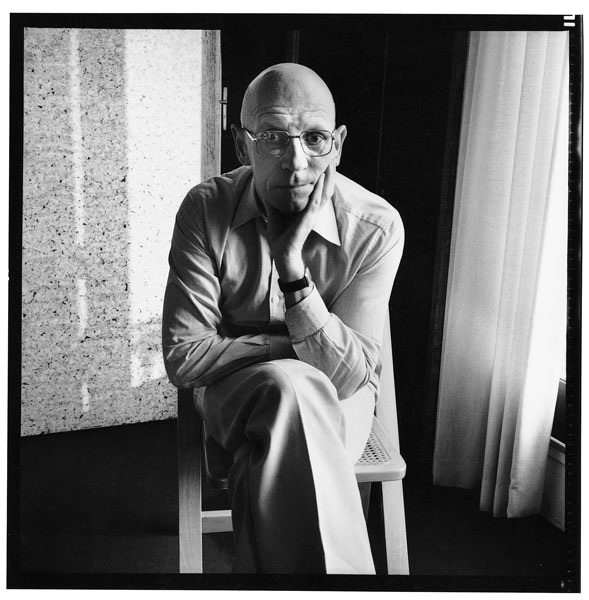
Okay, I'm married to an academic and she is the absolute fulcrum, focus and filigree of my life, but I had to pass on the wise, wise words of Manchester's very own Dwight Towers. In the latest DT blog post there is a rip-roaring sideswipe on academics, citizen participation in Manchester and on the journey you'll encounter Foucault's notion of 'governmentality'. All I can say is that it is a fine way to start the week and gives me an excuse to use a picture of Michel Foucault.
Sunday, 4 April 2010
Hide and seek, at Brockholes
We recently finished a new brand for the exciting ‘Brockholes’ project, a Lancashire Wildlife Trust plan to create a new £8.6 million nature reserve and visitor centre on the site of a former gravel works just outside Preston. The project is being funded, to a large degree, by the Newlands programme which we’ve worked on for a number of years now for the Forestry Commission and NWDA.
We’re proud of our work on Brockholes - led by our senior designer Helen Thomas. It’s a pretty extensive brand work-up, stretching through to retail, interpretation, ‘play’ and the tone of voice of the people that will meet and greet when you visit the 106 hectare complex from Spring 2011.
We’ve liaised closely with the architect Adam Khan whose ‘Floating World’ design is genuinely inspirational and we’ve done loads of research, both on comparator brands and the brandscape, as well as focus groups with the target audiences for this ‘unreserved reserve’.
We’ve opted for a monochrome palette to reflect the Wildlife Trust brand and the word Brockholes is supported by a lexicon of spot words, which show some of the fun things you can do. The whole thing comes together as if visitors themselves had been involved in the creation of the site; as if they doodled Brockholes up out of the disused quarry next to the M6. This will be extended, we hope, to invitations to interact across the site, with black and white internal walls that come to represent giant blackboards – with fun headlines supplemented by chalk or charcoal so that adults and children alike can leave their mark.
Tuesday, 30 March 2010
The City Region Project
Last night the world shifted, a little. Stockport joined the other nine local authorities across Greater Manchester and agreed to establish a combined authority for the ‘city region’ of Manchester.
I know, it sounds like a mouthful, and that’s even before you start talking about ‘Economic Prosperity Boards’ or ‘Agglomeration Economies’.
Put simply the Combined Authority is a permanent and statutory body that has powers over some fairly major issues like transport, planning, regeneration, skills and employment. Critically it will also (hopefully) make sense of Greater Manchester’s work on tackling climate change and creating a low carbon economy.
We don’t get the fun and games of an elected Mayor, which I’m a little disappointed at, given that such a figure would, to my mind, give us more ‘punch’ nationally and internationally. Instead we’ll get a slight reshuffling of AGMA deckchairs to create a city region executive (stay awake at the back there!).
If like me, you’ve been traveling on the slightly dilapidated trolley bus of devolution for some time (I was part of the aborted ‘YES’ for devolution campaign a number of years ago), then this is all a step in the right direction. We don’t have enough power, Whitehall doesn’t always serve us well, and there is far too little accountability at the regional level, in spite of the good job that our Regional Development Agency has done.
But that last point is critical. This has to boost the transparency of power.
If I’m honest, I think the workings of AGMA (the Association of Greater Manchester Authorities) to date have been related to the world at large with all the compulsion and flare of an incarcerated scoundrel scratching out days on the wall of his cell. Either that or a narcoleptic let loose with a word processor. Dig deep into the bowels of the web and you will find AGMA minutes, impenetrable research reports, crunchy and badly rendered maps.
You won’t find anything exciting. Trust me.
So that’s what we need to pull off now. We need to make this next great phase for the city Disraeli described as ‘the most wonderful of modern times’ a compelling, high profile tour de force. It needs to set the world alight. It needs to set a different model for our future prosperity.
Most importantly it needs to communicate. If it’s back to somnambulant business as usual, I’m off the bus.
Tuesday, 16 March 2010
Can culture (help to) save the world?
Can culture help to save the world? That was the theme of a presentation I gave this week to Renaissance Northwest, the collective of museums, galleries and libraries across England's Northwest.
Monday, 8 March 2010
Clean city and the purpose of communications
Is advertising an accident of capitalism? Is pervasive commercial marketing simply visual pollution that should be curtailed? Is the point of our industry (design, marketing, communications) to connect people and ideas together more strongly, rather than to serve those very paymasters who would simply like to shift stock and bolster their bottom line? None of these questions are new, but they have an added relevance at the moment and they’re playing on my mind on an almost daily basis.
It always pays to pick up an old, but trusted, book and remind yourself that stronger and more experience minds have wrestled with critical philosophical questions time and again; they may even have pinned down an answer or two. So I’m back with Raymond Williams, the man who shaped 1960s Cultural Theory. His 1962 book ‘Communications’ is helping me to shape some of my thinking about what our business, communications, is for, in the light of the current (overdue) debate about new economic models and prosperity without growth. Here are some of his opening words in the book, and as you’ll see, they have stood the test of time:
“In our own generation, there has been a dramatic tightening of interest in this world of communications. The development of powerful new means of communication has coincided, historically, with the extension of democracy and with the attempts, by many kinds of ruling group, to control and manage democracy.”
Critically, Williams goes on to assert that society and communications are one in the same:
“We have seen the central concerns of society as property, production and trade. These approaches remain important, but they are now joined by a new emphasis: that society is a form of communication through which experience is described, shared, modified and preserved.”
Williams also continues to state that modern communications has already (in the 60s) been abused for political control as propaganda and for commercial profit as advertising. It is this last point, the sense that communications has been abused through advertising for commercial gain, that is particularly powerful and appropriate for anyone getting their head around the question of what design, (social) marketing, public relations and communications is for. For me, what Williams is stating is the notion that communications, a powerful and creative shared conversation across society, has become synonymous with ‘selling stuff’ only as a direct result of its capture by capitalism. Extend this line of enquiry and reflect back to Williams’ assertion that society and communications are in unity, and the conclusion is a powerful one:
“Our commonest economic error is the assumption that production and trade are our only practical activities, and that they require no other human justification or scrutiny. We need to say what many of us know in experience: that the life of man, and the business of society, cannot be confined to these ends; that the struggle to learn, to describe, to understand, to educate is a central and necessary part of our humanity.”
There’s currently plenty of debate around what prosperity post-crunch should actually represent in our society and the idea that seeing economic activity as being our singular measure of progress is, to cut to the chase, barking mad. Williams’ fifty year-old declaration that communications is for something other than chasing profits and consumption fits right into this dialogue; it could almost have been drafted in the last twelve months rather than in the early 60s.
One thing that is powerful about Williams’ critique is that it is directed at the process and practice of communications itself, rather than more narrowly at the corporations that are driving communications or the consumers who are the recipients of their cajoling gaze. It was in a discussion with Jai from UHC last year, that I finally came to the conclusion that for too long the critique of advertising has focused on and ridiculed the consumer, rather than the creators of the ad or the promo. Adbusters is a good case in point here. Great creative, powerful analysis, but in their ‘Obsession’ or ‘McGrease’ culture jamming ads for example I can’t help but feel it is the consumer and not the superstructure of international marketing communications that is being deconstructed and ridiculed.
So perhaps it’s time to take the battle to the doors of the ad agencies and the marketeers. I’m still thinking and working this through, and tossing around the idea of the ‘Polluter Pays’ principle as applied to advertising, but one example of pro-active action does stand out: the Clean City Law of Sao Paulo.
In 2007 the mayor Gilberto Kassab was on a mission to remove the city of visual clutter. This, the fourth-largest city in the world, was to made beautiful as part of a Clean City Law. It was a bold programme and it included a push to remove virtually all visual advertising from the city. The idea was to let the city and green space and natural scenery take a higher level of prominence rather than ads for cars, knickers and consumer goods.
The advertisers did not go willingly, dragging their heels and getting slapped with an $8 million fine in the process, but as contemporary images of Sao Paulo show (such as those by the documentary photographer Tony de Marco), the city has been scrubbed clean of advertising clutter, and the result is not a Soviet-style denuded city of faceless buildings and lifeless streets. The programme has worked thusfar and has been met with some approval, with surveys showing seven out of ten residents happy with the new law.
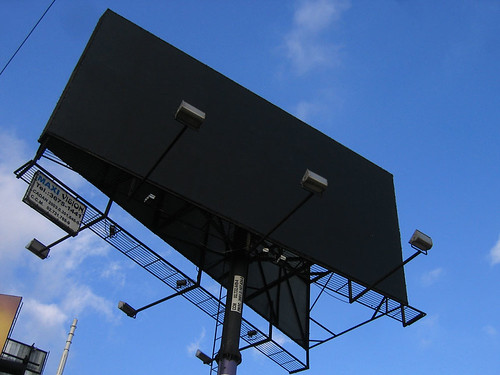
Tony de Marco’s photography does show one strange outcome of the law - the billboards and supporting structures still remain even thought he shrill call to BUY BUY BUY has been removed, leaving a ghostlike remembrance of the art of selling hanging over the city like some angels in a Herzog movie. I don’t know if this is the outcome I’d be after.
Going back to Raymond Williams, if communications is one with society, and if it could just as importantly be an alternative force “through which experience is described, shared, modified and preserved,” then surely there should be a case not simply for a comprehensive teardown of the billboards but of a shared space where society gets some of its mental space back. Imagine ‘folk advertising’ that shared recipes for jam, DIY tips or the very latest available on Freecycle; imagine a new platform for emboldened social marketing that promoted health, sustainability or tolerance; imagine simply setting these spaces over to art and creativity.
If communications is society’s shared conversation, and it has been all about consumerism until now, then let’s shift the topic, and talk about something new, and better.
Saturday, 27 February 2010
Northwest Forestry Framework - The Manifesto
This is my presentation from Thursday this week to colleagues from the Northwest's Forestry Framework - our plan is to double woodland cover, secure millions of tonnes of carbon AND create more green jobs.
Tuesday, 22 December 2009
Shrinking cities versus sustainable cities
A good meeting yesterday with Diana Balmori and her colleague Monica. We talked about a couple of projects that we're pitching on together and about the work we'd done at Creative Concern on place branding and creating a sense of place by working with communities, specifically the Real Lives campaign in Wythenshawe.
After that we talked on the related topic of the 'shrinking cities' concept that gets peddled around by planning academics (particularly a group led by Phillip Oswalt in Germany, who decided to label Manchester as one of their so-called Shrinking Cities). It strikes me that whilst, historically, cities may well have come and go, with the twin-tracks of intense urbanisation and resource depletion/climate change, we cannot entertain the idea of shrinkage - or even the death of cities - any more. We have to follow a course like Manchester's, and respond to industrial change through innovation and renewal... that's why the original modern city isn't shrinking any more.

Tuesday, 15 December 2009
Breakfast Club at the Urban Design Institute
Had a fab time this morning speaking to a breakfast session at the Urban Design Institute in NYC. The session was held at the Center for Architecture and the other presenters were Jake Barton (Local Projects), Jorge Colombo (artist) and Katie Dixon (Downtown Brooklyn Partnership).
With a good sized group of urbanists, architects and designers we discussed communication and urban design, and how the new accessibility of information is changing the way we experience our cities... we also had a good old poke at consumerism and bad branding... or at least I did.
My fellow presenters were fascinating. Jorge's work for the New Yorker, painting with an iPhone, was beautiful and insightful; Jake's work with interactive installations was utterly brilliant and I totally plan to collaborate with his group if I can; and Kate's work in Brooklyn is so close to some of our work, it was brilliant to make a connection.
Fab to be in the Center for Architecture, too - very much in the vein of our own, fabulous CUBE in Manchester.
Friday, 4 December 2009
This Land is Our Land
At the Bluecoat in Liverpool today, we helped with the launch of 'Adapting the Landscape', a framework vision for a new, productive landscape fusing together the two city regions of Liverpool and Manchester.
As well as producing some materials and a presentation for the event, Creative Concern was a key part of the project team, contributing to the new vision for a land that is home to 6 million people and an economy of £50 billion. The other members of the project team - led by URS Corporation - were WXY Studio in New York, West 8, Barnes Walker and the lovely people at Urban Practitioners. The project was funded - and steered - by the NWDA and the Regional Parks Xchange (where you can go to download the presentations from the event) as well as the Mersey Basin Campaign, Natural England, Homes and Communities Agency and Peel Holdings.
The ‘Adapting the Landscape’ research study is basically about using landscape, place and sustainability to help unlock even higher levels of prosperity, wellbeing and quality of life. It provides a framework for landscape adaptation and investment that can tackle climate change, support improvements in people’s quality of life and underpin economic growth. The framework we've come up with identifies the contribution that natural landscape resources can make to the future development of the Lower Mersey Basin, the area covered by this study. At the same time the approach provides a toolkit for identifying and prioritising investment that can be applied to any area.
The themes we explored through the project - initially as a set of future scenarios - included:
Mersey Bioregion
This is centred around a move towards a more self-sufficient, sustainable region with an emphasis on localism, renewable energy production, the growing of food and energy crops and a landscape well adapted to climate change.
Innovation Axis
Here, the key is to connect the city regions and major towns with stronger communications set in an area of attractive and marketable green infrastructure. There would be a focus on jobs and opportunities through the connection of knowledge centres and growth industries, including environmental technologies and services.
Mersey Playgrounds
This strand recognised the importance of high quality, accessible local environments where people can play, travel and work. Waterways will become destinations and leisure routes; flood alleviation measures will be used to create new landscapes and culture and art will be used to transform the visual experience of the region.
So what could be achieved? Some of the possibilities include:
Green the cities. Take the landscape of the Lower Mersey Basin into the heart of the cities with street trees and enhanced green infrastructure.
Embrace the waterfronts. Create and improve green access along the river and other waterways, stretching into the heart of the city regions and where possible, new water bodies.
Create a diverse landscape. Make the Mersey Bioregion the most dynamic, productive and biodiverse landscape through land art, farms and planting.
Manage a productive landscape. Produce energy from wind, tides, biomass and the sun.
Facilitate an accessible landscape. Establish a fine grain network of paths and bridges to accompany existing strategic arteries with an emphasis on localism.
Create a landscape for prosperity. Continue the Mersey’s history of innovation. In centres like Daresbury it is environmental technologies leading our way into a low carbon future.
Build a resilient and playful landscape. Utilise funding for flood defences to respond to flood risks and create iconic cultural landmarks, public space and new biodiverse habitats as part of ‘Mersey Playgrounds’.
Our next challenge is to build all of the above into the region's new Integrated Strategy (RS2010). Watch this space for more details.
Tuesday, 1 December 2009
Guerilla Lighting in Manchester
Photos of a guerilla lighting 'action' led by BDP in Manchester during December 2009. The photo is of an illuminated railway arch just near the old UMIST campus. More photos at Martin Lupton's dedicated Guerilla Lighting blog. There also more images at Walter Menzies' blog.
Monday, 22 December 2008
Brand Earth
This year sees the 175th anniversary of a milestone in corporate responsibility. In 1833 we finally made slavery illegal, or at least that was the headline.
For 30 years or so there’d been a loophole in the law that allowed companies to continue to trade, facing a possible £100 per head fine if they got caught. Or they threw slaves into the sea at the first sign of an approaching Royal Navy vessel.

Whatever, we closed the loophole.
Corporate behaviour being what it is, too often, a further loophole remained. Any slave over the age of six wasn’t freed, they became ‘apprentices’, indentured as before. Years would pass before their shackles were loosened.
Then there was a compensation package of £20 million for slave owners, and exclusions, too: one for the East India Company and one for Ceylon.
It’s an extreme example but an informative one. No matter how heinous the corporation’s behaviour, there always appears to be some wiggle room.
Leap forward to 1970 and a burgeoning social responsibility movement got a hefty thwack around the head from the arch monetarist, Milton Friedman. His now famous essay, required reading for rapacious MBAs worldwide, appeared in the New York Times, stating that “there is one and only one social responsibility of business, to use its resources and engage in activities designed to increase its profits so long as it stays within the rules of the game”.
Ethical Corporation magazine - a good read - spoke on his death in 2006 of the service that Friedman did for the world of CSR. He made progressives in business sharpen up their act, add some rigour to their thinking.
They’re probably right and in some ways I may even be with Friedman on this one (at which point my oldest friends and colleagues will no doubt faint), my only major shift would be in what defines the ‘rules of the game’. Friedman’s stricture was legal compliance; mine would be about the corporation’s wider contract with society.
This fast and imperfect trolley dash through the history of corporations is designed to reveal that a) I’m good at looking things up on Wikipedia and b) that when you read the latest news report on ‘green brands’ or ‘ethical consumers’ or ‘fashionistas who wear hemp’ you realise that this is a dialogue that has been ongoing since King Magnus IV of Sweden created the oldest limited company - Stora Kopparberg mining corp - in 1347.
There is nothing new in corporations seeking profit but that pursuit has, from day one, been set against a context of wider social good. As a society we continue to fasten a judgemental eye on the corporation. A GfK NOP poll in May revealed that consumers rank the Northwest’s very own Co-operative Group as the most ethical corporation, retaining the top spot that it held in 2007. Next up come the Body Shop and M&S, with Innocent Drinks and Divine entering the top ten for the first time. Importantly though, the survey reveals some skepticism in the marketplace: just 18% of the 3000 consumers interviewed, compared to 21% in 2007, believed that business ethics have improved in Britain.
Those two new entries into the top ten, Innocent and Divine, are telling. They are brands - and products - that are constructed from the ground up as ‘eco-brands’. They follow a market appetite for sustainable products that has clearly entered the mainstream. They are not alone: ‘I am not a plastic bag’, anyone?
So can all of this be labelled ‘greenwash’? From the corporation that uses the gobbledegook of CSR ‘benchmarking’ or ‘continued improvement matrices’ to the conspicuous consumption that makes us feel better about using more of the Earth’s resources, is this another inflection of the free market capitalism which Friedman so adored and which a massive 82% of us still view with suspicion?
Perhaps. And can any brand or corporation be beyond intense scrutiny and examination in the age of mass communications where a 1,000 blogs can be updated in the blink of an eye? Ted Turner of AOL Time Warner once said that in the Internet Age it could take only seven minutes for your corporate brand to be damaged, globally, if you cocked things up.
If you want to take a more empowered look at what is, or isn’t greenwash then I’d urge you to download the greenwash guide recently published by our good friends at Futerra. As ever it’s pleasing combination of intelligent analysis with a tip-strip you can blue tack to your computer screen.
My closing comment would be this, however:
It’s not just corporations that have a contract with society: we have one too. People drive cars, eat meat, buy cheap shit and do too little to reflect their own value sets in their daily lives. We live in a dissonant fug for too much of the time and yet still reserve the right to judge corporations. If we shift our behavioural patterns then the marketplace changes too. The brightest and the best in the business world know this, they’re not stupid.
We are powerful, but we have to exert that power. We are complicit, and that should be in our frame of reference too. It’s a hippy mantra but Ghandi was right.
You must be the change you wish to see in the world.
Monday, 1 October 2007
Greening the Northwest
Today (Monday 1 October) I’m chairing a Forum taking a good old peak and a poke at the Northwest’s Forestry Framework - the strategy for woodlands and forestry across England’s Northwest. It’s been in operational ‘mode’ for around a year now and I’m dead pleased that there’s been some progress made (though a good few challenges remain).
There is co-ordinated activity across the region taking forward a host of actions set out in our ‘Agenda for Growth’. Of the 47 actions in our plan, 43 are underway and the remainder will almost all be coming onstream in the coming year.
So across our six areas of action we are genuinely helping to bring the businesses working in woodlands and forestry together more closely into a recognisable sector; we are enhancing our region’s image through greenspace development and we have plans for the transformation of gateway sites; we are supporting ‘greener’ farming and seeing the restoration of natural areas; we are making good links with the health sector, with education and with the prison service; we are putting efforts into developing biomass as a sustainable energy source within the region; and we are staying focused, in our sixth action area, on how we can keep improving our performance as a sector not least with the launch of a new Rural Development Programme for England.
And I am particularly pleased that we are planning a few, signature projects out of the Forestry Framework ‘stable’ that hit a number of our targets across differing action areas.
These include a plan for a conference and PR campaign called ‘Form>Wood’ which will target the architecture, design and urban development sectors with the message that wood is the sustainable and contemporary material of choice. We are also launching a programme to really get to the heart of whether our urban tree cover is as healthy as we think it is or should be and will use the results of our surveying work to raise the game of our local authorities, in particular.
So there is plenty of progress in greening the region and supporting the sector, but there are many, many challenges that remain.
We must continue to expand our partnerships beyond the usual suspects. We need to develop more joint projects like the recent Land Remediation Network we’ve established with Envirolink and we seriously need to improve our linkages to the private sector.
We need to ask ourselves, honestly, if we are trying to do too much or if the Framework is adding enough value to the region’s endeavours in our area. We must ensure we are the very opposite of a talking shop: we must be a source of action, activity and transformation.
We have to reach out and ensure that a much wider audience hears of our progress and finds out what they can do to partner up with us and help deliver our programme. We must create more of a ‘buzz’ now that our projects and activities are taking form.
And we have to improve the entire sector’s performance in a few key areas.
We have to get better at influencing regional strategies and helping shape our region’s future; a new Regional Economic Strategy is being developed and we have on the horizon the prospect of an Integrated Regional Strategy which should have woodlands, forestry and greenspace as a key component; the true ‘setting’ for prosperity and growth.
We must do our part to deliver against the region’s Climate Change Action Plan, particularly in the adaptation to climate change impacts where woodlands forestry has the power seriously help to improve the resilience of both our rural and urban areas.
Finally we need to strive for ever better levels of design and delivery. If we are given the incredible opportunity of programmes like Newlands we must create spaces and places that inspire and transform communities; that rival anything, anywhere in the world; that make England’s Northwest a region that attracts talent, investment and trade.
In 2008 we will be working to freshen up our Action Plan in the face of new national and regional developments but there will be no new strategies or visions or frameworks in the next few years; we have our plan, our stakeholders have agreed it and we will be sticking at it until all of our actions are delivered and all of our promises are made good.
Alongside a few other key areas of regional endeavour, such as the knowledge economy, climate change and work to achieve greater levels of community cohesion; our sector - woodlands and forestry - has pivotal role to play in delivering a more sustainable region for the future, a greener future for England’s Northwest.
Subscribe to:
Comments (Atom)