Showing posts with label sustainability. Show all posts

Tuesday, 25 September 2012

Out, proud and green

I've just discovered what a great job the team at Manchester Pride are doing on making our city's annual gay pride party - one of the biggest and longest running in the UK - into a more sustainable event.

This year was as fabulous as ever, with a bit of science theme thrown in to commemorate the amazing Alan Turing (apparently a “Gayger” counter was featured, as well as a profusion of Turing’s Sunflowers). The Pride team also made huge headway on cutting their waste, too.

They got all the businesses in the cordoned off area for the event to suspend their own waste company collections during the period so they could manage all the waste across the whole site.

Historically it's been difficult to get the bars to split their waste into recyclable and non recyclable due to the fact they are so busy over the weekend, so they took the decision to employ additional staff to go into the bars themselves to collect the bottles and other recyclable waste.

The bars are mainly on a run along Canal Street so the staff went from one bar to another along the strip collecting the waste.

Pride's aim over the last few years has been to increase the amount of waste recycled and five years ago, the recycling rate was approximately 10% - they had some ground to make up.

This year, in total, their waste management company collected 22,700kg of waste and recyclable materials and they recycled a total of 9,590Kg which means the recycling rate was a massive 42.25%, nearly 10% up on last year's figures and a big leap up from 10% five years ago.

Sunday, 1 July 2012

Bikenomics & Manchester

Here's a presentation I gave a few weeks back at the launch of Love Your Bike's manifesto for cycling in Greater Manchester. As ever, the subject of Middle Aged Men in Lycra (MAMILs) was covered...


Thursday, 21 June 2012

Solar spill

Love this - Pattison Outdoor has denied Greenpeace Canada the space on one of its billboards in downtown Edmonton – and handed them a stonking PR opportunity.


Wednesday, 22 February 2012

Where's Manchester up to on climate change?

I've just been pulling together a presentation on climate change action across Manchester as part of my job as chair of the city's climate change steering group. All suggestions for other projects very welcome!


Stateofthe city2012
View more presentations from Creative Concern

Monday, 1 August 2011

Greater Manchester signs off 48% carbon target


Imagine that - kicking off a blog posting with a headline that references percentages, targets and an admin process for signing off a strategy; stay awake at the back there!

It's pretty fundamental this one; Britain's second city (Greater Manchester to you and I) has signed off a climate change strategy that sets a pretty ambitious target of 48% carbon reductions by 2020 against a baseline level of 1990.

It doesn't stop there. The strategy covers all the bases, including mitigation, adaptation, green jobs and the need for a cultural shift (low carbon hegemony anyone?). The other cheeky bit lurking under the tarpaulin is an emerging measure for the thrillingly entitled 'Scope 3' emissions. To anyone who doesn't doze off at night with a copy of 'advanced carbon footprinting' clutched to their bosom, these are the emissions that we usually try and ignore: the stuff we buy, the flights we take, the food we eat.

Here's the first glimpse of our 'consumption-based' carbon footprint


The strategy as presented to the Greater Manchester Combined Authority can be downloaded from here. It's still in a stripped down, word-processed, no-frills format, but is well worth having a gander at. The headlines, in essence, are:

 - A rapid transition to a low carbon economy
 - Collective carbon emissions reduced by 48%
 - Be prepared for and actively adapting to a rapidly changing climate
 - ‘Carbon literacy’ will have become embedded into the culture of organisations, lifestyles and behaviours

There's some progress already, with a number of low carbon buildings, a domestic retrofit programme, emerging heat network plans, a green deal project and the introduction of an electric car charging scheme already well underway, but it's only the start.

The other issue for me is that it is a solid step towards getting all ten Greater Manchester authorities onto the same track on climate change. I chair the steering group for Manchester's own plan - 'A Certain Future' - and I know that we could achieve so much more if we all worked together, better, to cut carbon and adapt for the changes that lie ahead.

Sunday, 17 July 2011

Vertical farming in Manchester

I've just emerged from chairing the sold-out Vertical Farm event at Manchester International Festival. We officially unveiled the 'Alpha Farm' project which will seek to transform a disused office block in Wythenshawe into a fully-functioning vertical farm.

Supremely exciting and there are loads more details on our Alpha Farm blog.

The star turn today though, was the amazing and inspiring Dr. Dickson Despommier, the godfather of Vertical Farming and the author of a seminal tome on the very subject. He was brilliant - and braved a very windy and rainy Manchester to be with us from NYC.

Here's his presentation which will give you a little glimpse into what you missed if you couldn't make it:

Mcr_Despommier

And we've made a little film about the whole Alpha Farm thing:


Thursday, 17 March 2011

Manchester's Vertical Farm

Goodness me it's been hard keeping this one quiet. We've been very, very lucky at Creative Concern HQ to be working with the Manchester International Festival on a proposed vertical farm, right here in Manchester, housed within a transformed office block.

We've worked on the feasibility with sustainable food expert Debbie Ellen, Capital Relations and, naturally, our brilliant friends at Urbed.

More details eventually... but for now, here's Urbed's visual schematic as a 'taster' and I suggest you all book your tickets for the awesome Dickson Despommier!


Wednesday, 19 January 2011

The Museum in 2030


We've been working with our friend and collaborator Alex Saint on a series of 'insights' for the North West Federation of Museums and Galleries - the NW Fed to its friends. The idea behind the pieces we've pulled together is to stimulate some radical thinking and give hundreds of institutions across the region the tools, ideas and approaches that will help them thrive in these challenging times. There's also an emerging LinkedIn discussion which is worth checking out.

Here's one of the pieces I wrote, in this case, it's a view to the museum of the future:

Rethinking the Museum

The successful museum in 2030 will be a place that unites; that engages; that takes the continued wonder of the original object and fuses it with shared stories and distributed histories. The transformation will have been powered by new partnerships, business innovation and a keen, clear eye on the shifting shape of society.
At the same time some of the museums we know and love today will be distant memories, their collections dispersed and their buildings transformed into centres of new activity: work/live units for micro-creatives; crash pads for funky seniors; urban food hubs; or incubation facilities for nanotech start-ups.

The notion that ‘not all will survive’ is as liberating as it is threatening. Think back just ten years and you will be able to think of organisations or institutions that are no longer a feature on our cultural landscape, or of new ones that have flourished. Change happens, and the shift in the next 20 years will be one where the innovators, the resourceful and the valued have thrived and survived. Those resistant to change will not have fared so well.

Making culture pay

At the most basic level, there will be a fiscal revolution in the two decades to come. There will be new ways to make culture ‘pay’. Smart cards for travel networks in our urban centres will also be used to extract voluntary (but relatively ubiquitous) entrance fees for arts and cultural venues such as museums; they will also log our preferences and help us, through enhanced social media, to discover new experiences in an age where experience carries a higher value to our citizens than consumer goods.

It won’t stop there though. Successful museums will have learnt how to save money and make money, to enable them to continue to deliver unique and invaluable public services. This will have been achieved, not least, through a zero carbon, zero waste revolution. Monetisation of the museum will be key. They will be true social enterprises, that offer paid for services, have a healthy network of volunteers or ‘members’ and have become more adept than ever at exploiting the philanthropy of those with ‘significant net personal worth’. They will be commissioned for services from a network of public and private ‘client’ groups; and they will be past masters at leveraging the value of their brand.

The bricks and mortar of museums will have changed in 2030, but our architectural landscape will not have shifted so dramatically; it always worth remembering that 80% of today’s buildings will – barring cataclysms - be still standing in fifty years’ time; what’s in those buildings is another matter.

There will, in 2030, be more of a barter and exchange going on in terms of collections – think of the PlusTate programme, which through a sharing of resources currently supports the development of the visual arts right across Britain, but taken to a whole new level. These exchanges will have a ‘showbiz’ value for visitors and will be as much about the shared brand equity of the big name museums, with ‘on show now from the V&A’ becoming a common line to see on promotional material.

This starts to break down the notion of museum as collection and shifts to the notion of museum as experiential brand. Across the next 20 years many would expect digitisation and virtual reality (remember that?) to challenge ever harder the primacy of the physical experience of collections but that will not come to pass; 3D printing will not create a ‘museum of museums’ in every town. What will happen is that collections are rationalised and in many cases thinned out; some may be given away to the community in return for social memories or histories that bring life to the ubiquitous mangle, butter churn or ZX81.

These stories will be captured, shared and in this way museums will not simply continue to be features of current and future social media networks (...‘Let’s have a Facebook page’ will no longer be the limit of their ‘Web 2.0 strategy’) but will actually become a new social media network, themselves, making connections, gathering their cultural tribe and offering a powerful mechanism for self expression.

Trust, democracy and a 'third space'

As a renewed and vibrant network, museums will increasing be genuine centres of democratic dialogue, interrogating the issues of the moment. From conflict resolution, to reproductive rights or the fight against climate change, the interpretation of collections will increasingly encounter and embrace the zeitgeist and be far more relevant as a result.

Part of this new buzz around museums will be established on a notion of ‘trust’. More than anywhere else they will be places and spaces in the future that people want to connect with because they are trusted and known as passionate, informed, but fair communicators of histories and ideas that matter; they are also the zone within which we increasingly choose to contemplate, relax, or make the bigger decisions in life. In 2030 we will be even more harried than today by bleeping texts, ringtones and the tsunami of email. Richard Wurman called it ‘Information Anxiety’ and he was on the mark. Museums will offer us, in the future, a respite from the everyday; they will be the space we need.

And they will be well established by then in this new mode of operation. What the next twenty years will provide is the added perspective, post ‘age of anxiety’, that reveals the powerful effect of major investments around the turn of the millennium. There will be no such dramatic investments in our run through to 2030, in fact the next twenty years will be all about making those historical investments work, and work hard.

This work will be undertaken together. There will still be a North West Federation of Museums, indeed there will still be a North West of England, in twenty years time. What feels in 2010 like a complete reshaping of our political and cultural landscape post-recession will seem less pronounced in 2030, although museums as a sector will have helped many people, not least through their strong sense of social purpose, to ‘get through the worst of it’.

Museums will be a sector in 2030. There will be a collective. From new business models to artefact exchanges or the creation of a new ‘social media’ of museums, all the key trends for the sector will rely heavily on the sector working collaboratively and in partnership. Core museums will learn from nationals, and vice versa; local museums will boast a new charitable trust status, independent from their local authorities, benefitting from  mutuality and enterprise. The new ‘pop-up’ museums of the 2020s will, in particular, be an unexpected and challenging addition, not least because they make the effort to stay open, just that little bit later.

The Great Transition

The networks and sharing that hold the sector together will become more pronounced in the future. There will be a regional ‘currency’ of museums that helps them share with each other collections, staff and expertise; there will be a skills bank that all can access to raise their collective game; and there will be a shared infrastructure that is physical, digital and human.

The great transition ahead will challenge us all. Vision and leadership will be prerequisites. The people who will steer the sector into this future will have to be networked, resourceful and ready to embrace change. They will have recognised and risen to the need to be true civic leaders, with a mandate to provide the places and experiences which we will all access in some way.

And that uplift in ‘taking part’ will be critical. Currently fewer than half of all adults visit a gallery or museum each year – in 2030, if we have succeeded in transforming our sector, there will be much higher levels of engagement.

Today there are 290 museums and galleries across England’s North West. In 2030 there will be fewer than this and they will be stronger, more resilient and more productive than today, if collaboration and innovation is pursued, as a collective goal.

A final view into the future, then, should spell out more clearly what some of those shared goals might be. What’s clear is that the sector will have a critical role in unlocking minds, educating and engaging the public. Within our time horizon of 2030 there will be a ‘double hit’ for example when you consider the region’s social capital (or skilled people, to you and I). The demand for low-skilled jobs will drop dramatically as our economy continues to shift up the value chain towards industries based around intellectual property and key sectors such as low carbon goods and services. At the same time we have a worrying skills ‘bubble’ in the pipeline, with half of our current workforce not making it past A-levels at present. Museums can and should be in the frontline of creating a new culture of learning that ensures we are not left behind in the skills race. The challenge today, with an eye on 2030, will be for museums to identify the topics and areas that are important, economically, which they can explore and bring to life for students young and old; here they should connect with local partners who are driving economic strategy and forecasting.

Museums will also have a shared goal of keeping our minds ticking over. The fastest growing audiences in the next twenty years will be the over 60s, as our society grows significantly older and greyer. This is a critical mission, particularly where museums can overcome isolation, connect with social histories that will stimulate memories, and respond pro-actively to the notion of new skills and new employment for people in their ‘third age’.

Museums can (help to) save the world

There is a third, almost didactic role for museums, working collectively, and that is to be part of efforts to create a genuinely sustainable future. As centres of experience rather than consumerism, museums immediately offer an alternative to the ‘consume at all costs’ culture that has successfully damaged or destroyed 60% of our planet’s ecosystems. Beyond this role, they can also access the ‘headspace’ within which we need a dramatic shift in thinking and values; technical ‘fixes’ for climate change for example are already reaching the limits of their application as we realise that it is behavioural change and our shared culture that will be pivotal in handing a habitable planet over to future generations. By 2050 we need to have reduced our carbon emissions by a phenomenal 80% or more, and this requires a complete change in the way we view the world.

It’s a change that museums can help to deliver. Sustainability messages sold as drab calls to constrain consumption, use less and lower your expectations have been failing spectacularly for a generation or more; museums can bring delight, intrigue and play to this mission, in many ways they are perfectly placed for it.

This final notion of creating delight is an apt place to end an exploration of 2030. Today many are focused on survival, both within the museum sector and beyond, but across a longer time frame there is an opportunity to create universal delight that make places more characterful, that makes minds more inquisitive and makes communities stronger. One recent study revealed that the use of social networks like Twitter possibly releases the brain hormone ‘oxytocin’, also known as the ‘cuddle’ chemical that makes people feel trust, security, less anxiety and possibly even turned on. It’s all about connecting with people, and interacting, in a delightful way. If museums are a social network of the future then they need to set their sights too on the cuddle chemical as their central indicator of success; or as they call it in Tameside, generating more ‘moments of magic’ through museums.

This is the future. It is ours to create.

__

NB. Thanks to NW Fed for a great project - and also to Renaissance North West, MLA and National Museums Liverpool for making it happen. Also am heavily indebted to the awesome work done by the Center for the Future of Museums in the USA and has some valuable input from Stephen Feber.


Wednesday, 5 January 2011

Charting our course for a certain future


New year, new plans to save the world... but first a look back, finally, at the big bash that took up a good deal of my time at the tail end of 2010 - the first stakeholder conference for ‘Manchester: A Certain Future’, which took place at the revitalised Museum of Science and Industry (MOSI) on 30 November 2010.

(M:ACF in case you're wondering, is Manchester's Climate Change Action Plan, which I had a hand in helping to write in 2009.)

Back to MOSI, though. Delegates from a host of different organisations and sectors took part in a hands on, highly interactive day of workshops, debates and networking sessions designed to help all of those attending to share their plans for the future, identify what was working (or not) in the fight against climate change and to make fresh connections with possible future partners.

The shape of the day was deliberately experimental, from an art session where participants were given the opportunity to literally draw what a low carbon culture looked like, to ‘carbon dating’ where the focus on was on a series of quick fire meetings with new people to share ideas and thoughts for the future. There was also a masterclass on low carbon regeneration and a series of sessions where delegates shared the barriers they had overcome, or their plans for the future.

Future scenarios

As well as chairing the day, I had the chance to run two 60-person sessions with Joe Ravetz of the University of Manchester to focus peoples’ minds on that certain future, using the scenarios (good and bad) that have been created by the University’s Eco Cities research team. The two scenarios – an Upward Spiral and a Long Descent - were brought to life by fictional radio broadcasts from the future crafted by Phil Korbel of Radio Regen and then participants voted on how they thought Manchester stood in the face of such changes.

The good news? Few participants thought that our city is on a collision course with certain disaster, by stating that they thought the future set out in a Long Descent was a sure thing. In fact in both sessions, half or more of those taking part stated that they thought Manchester was a headed in the right direction, to some degree.

When we asked in what areas we were strong or weak in the face of climate change, those taking part felt that we had a good track record on technology and innovation an that we had strong political leadership driving us forward. Where were judged to be weaker, by those voting, was on a shared set of public values around climate change, and on working towards a more equal society.

What next?

Shared values and developing a low carbon culture were the clear priorities that emerged from the day, including a final concluding vote from delegates that gave our stakeholder steering group a clear mandate to push for this as a focus for 2011.

Attendees also told us how they thought we could improve the conference for 2011, including building in more advanced notice of the event, improving the diversity of the event (though a number of attendees remarked on how it wasn’t the ‘usual suspects) and to create a greater presence for the event in the conventional media, as well as the Twitter reports that were a feature of the day, thanks to Inside the M60.

Saturday, 30 October 2010

More on world-saving museums

I was at the Maritime Museum in London yesterday giving a revved up version of my 'Can Museums Save the World' presentation which I blogged about a few weeks back; after suffering a train cancellation and moderate level ticket barrier carnage at Euston, I got there a wee bit late but in time to deliver my pitch. A fascinating group of senior people from National museums had been assembled, and all had a keen eye on what the future may hold for their institutions.

Much of my pitch is about sustainability, but blended with a bit of futurology. The basic question is: What will museums be like in 20, 30 or 40 years time if they are truly sustainable? Will they be embedded in their communities, treading lightly on the planet and financially thriving?

In terms of the futurology slice of my pitch pie, I've leant heavily on some superb work being done by the Center for the Future of Museums in the United States. They've produced a superb paper on what 2034 might look like for the museums sector, and for the California Association of Museums they've pulled together a full 'futures' resource guide complete with five 25 year scenarios, suggested worksheets and some guidelines on how to hold  a futures-focused session in your own organisation or network.

The sustainability part of my pitch however, is all the product of my own chunterings over the last couple of years. I genuinely see the world I know well (sustainability) and the world I am getting to know better (culture) as natural collaborators, if not wholly intertwined players in creating a better future. These two gorgeous worlds, bastions of progressive thinking, are of course arrayed against a third universe of infamy: the world that thinks economic growth and perpetual materialism are the only things that make life worth living.

Anyway so here are the key points:
  1. Happiness and wealth fell out with each other more than half a century ago.
  2. We need to ‘reboot’ economics and find a way to achieve prosperity without growth.
  3. Non-materialist forms of social capital and experience are part of the solution.
  4. Culture and the experience economy can win us back from materialism.
  5. Reaching people, and fighting for headspace, is a core strength of the cultural sector.
  6. Culture creates the places and spaces that people want to be in, fostering a more compelling and competitive identity.
  7. Innovation must no longer be the preserve of consumerist ‘novelty’ and desire but has to become part of how we craft our collective future.
Therefore, it's clear to me, that culture can (help to) save the world. Not least because just like the sphere of creative communications (design, media, advertising, film etc) that Creative Concern operates in, culture is an antidote to the idea that it is all about selling shit to sleepwalkers. I use this quote from Raymond Williams' 1962 book, Communications:
Our commonest economic error is the assumption that production and trade are our only practical activities, and that they require no other human justification or scrutiny. 
We need to say what many of us know in experience: that the life of man, and the business of society, cannot be confined to these ends; that the struggle to learn, to describe, to understand, to educate is a central and necessary part of our humanity.
I know to many, particularly in the current climate, the notion that economic growth is a futile and unsustainable pursuit probably comes across as a piece of sideshow prattling; but it is those that still pursue this ultimately self-defeating course of 'growth at all costs' that are, to use the vernacular, 'off their rockers'.

Another quote I like is from Edward Abbey:

"Growth for the sake of growth is the philosophy of the cancer cell."

Enough said.

Tuesday, 12 October 2010

What is Creative Concern?

I've recently been called upon to explain myself. Quite right too. Embedded below is a trolley dash through the chaos that is my head. It starts with a bit about why and how we do what we do at Creative Concern, before moving onto some of our bits of work 'out there' in the real world that we love so much.

As is ever the case, it's an evolving pitch so if there are any bits that could do with improvement, please send your thoughts in now on the back of stamped addressed envelope.

Tuesday, 5 October 2010

Can museums save the world?

I'm off to deliver a 'provocation' tomorrow morning at the annual Museums Association conference here in Manchester. My pitch – no huge surprise here - is whether museums can help chart our collective course into the future, deliver greater levels of environmental sustainability and deliver major societal change. Not asking too much there, then!

With the rest of the team at Creative Concern I've been lucky enough to work with loads of cultural organisations over the last few years, such as the Whitworth Art Gallery, Manchester Museum, the Museum of Science and Industry and Renaissance Northwest. They're all amazing institutions and people, and I'm genuinely in awe of their potential to reach out and touch people, to open minds and, possibly, help us create a better world. Even in the 'Age of Austerity' there can be no other mission with such singular importance.

In putting the pitch together for tomorrow, I found myself particularly absorbed by the work of the Center for the Future of Museums in the US. They've done some great 'futurology' work recently and I think that they're a fine model to follow; the 'Tomorrow in the Golden State' report is worth reading, if you have the time.


Saturday, 11 September 2010

The Forests of TAFKAR*


I've been working on a plan, recently, to get some more trees in the ground. Nothing new there to anyone who has visited this blog before, but I thought it was time for an update.

I chair the Northwest Forestry Framework (soon to change it's name to something more in keeping with the political zeitgeist, but more on that another time) and have been working with a whole host of people, both in the Northwest but also in the national offices of the Forestry Commission, to put forward several areas in the Northwest as possible pilot areas for a major national push on woodland creation.

As an area of England with a level of woodland cover well below the national average, there is scope and opportunity for large scale tree planting and development right across Cumbria, Lancashire, Greater Manchester, Cheshire and Merseyside. When you look at the statistics, we are poorly served in these areas when it comes to woodlands.

The good news is that each of these areas has also developed clever and canny new models for woodland creation that deliver multiple benefits and move beyond traditional public sector investment models towards partnerships with business and the voluntary sector.

It's all very, 'Big Society'.


Now these areas are signing up to a ‘forestry manifesto' that I've been touting around the region since the start of the year. This manifesto seeks, over 40 years, to deliver a doubling in woodland cover, to have an immediate and significant impact on carbon stores, timber production, environmental resilience, green jobs, local image and happiness and wellbeing; this is a vision of an intensely productive, as well as beautiful, landscape.


Show me the money

It all sounds very motherhood and apple pie, but who is going to pay? There are a number of existing or planned investment models across the Northwest which warrant further development and replication elsewhere. These include:

• Woodland planting as a key aspect of PFI (Public Finance Initiative) contracts and, specifically, waste management strategies;

• Working with large-scale developers to create an attractive setting for investment and adding value to land-based asset portfolios;

• Practical business partnerships providing improved local area ‘image', biomass resources or climate change adaptation;

• Woodland or green infrastructure bonds, where investors can support woodland creation by investing in a bond that provides non-fiscal benefits in lieu of interest payments as part of a CSR or sustainability strategy;

• Developing a suite of woodland creation opportunities alongside community interest levies/section 106 arrangements where developers support environmental works as a condition of their planning consents; and

• Integrated land use planning to maintain and improve water quality.

• Landscape-scale, economically-linked programmes to aid recovery and local economic resilience.

Some of the above options sound a little jargon laden, but they have the potential to help us get some trees in the ground, and that's what I care about. Each of these investment models is either already in play across one of our counties or city regions, or is ready to be developed by one or more partners.

Breaking down barriers

From the discussions we've been having so far, these partners are ready to start delivering woodland creation, on the ground, if certain barriers to progress can be removed. These barriers include:

• The ‘Hope value' attached to under-utilised land and the misplaced notion that new woodlands permanently remove large areas from possible future development;

• More flexible, short to medium term land use deals and frameworks that will allow the notion of ‘temporary' woodland to be pursued;

• Clear signals on the future of carbon pricing and accounting in relation to woodland creation;

• The lack of a mechanism for business to report on the carbon benefits of woodland creation programmes as part of their net greenhouse gas emissions; and

• The consideration of effective tax regimes to encourage investment in new planting in areas of need as a way for business to play a part in 'big society' programmes.


Making it happen

So the exciting thing is that if we bash down a few barriers, win over some hearts and minds, and pull our fingers out, the partners in the Northwest Forestry Forum are ready to begin work piloting a new wave of woodland creation using innovative funding and delivery models such as these.

More trees, in the ground, delivering a huge range of benefits.

And the track record for delivery across the region is solid and impressive, with the Community Forests (e.g. Mersey Forest and Red Rose Forest) having already planted 12 million trees and millions more having been planted through the Forestry Commission's Capital Modernisation Fund and Newlands programme.

Here are some more tangible examples of where can start planting.

Real life example - Mersey Belt

There is an immediate opportunity for an ‘Adapting the Landscape' pilot across what has been coined the ‘Atlantic Gateway', connecting the twin city regions of Greater Manchester and Merseyside with the Northern areas of Cheshire.

Such a pilot would be focused on woodland creation in and around key physical development sites and along transport corridors; on productive forestry including biomass; on leisure, recreation and the ‘visitor economy'.

Funding can be drawn from business through receipts from soils deposition, community interest levies, Section 106 agreements, through an easing of planning constraints if the creation of greenspace is assured and possible short-term amnesties against business tax.

Delivery partners would include large development businesses in the area, as well as the key Local Enterprise Partnerships and the voluntary sector in the form of community forests and Groundwork.

Real life example - Lancashire

In Lancashire there is already an innovative model for woodland creation in the form of the county's ‘Woodlands from Waste' programme linked to a soon to be commissioned, 25 year, £2 billion Waste PFI.

A partnership of Lancashire County Council, 13 Local Authorities and their commercial contractor, Global Renewables, alongside the Forestry Commission, will be planting and managing 100,000 new trees per year for the next 25 years - creating woodland on brown and greenfield sites across the area. The cost is being met through savings on landfill taxes and, in addition, is utilising a growing medium by-product of the waste treatment process.

Real life example - Cumbria and Lancashire

Water company United Utilities has pioneered a programme called the Sustainable Catchment Management Programme (SCaMP), working with farmers and land managers, local authorities, Government and other conservation organisations to influence how water catchment areas are managed and properly funded. The objective is a double win of improved water quality (under the European Water Framework Directive) as well as conservation of the natural environment. UU's partner in the programme has been the RSPB.

The project has leveraged in public funding to help deliver an increase in clough woodland, with 450 hectares of upland oak woodland to be planted, some 300,000 trees being planted and 200km of fencing to allow for moorland restoration and woodland planting. It has carried out the work in two of its four estate areas: Bowland in Lancashire, and the Southern estate including Longdendale, the Goyt and parts of the Peak District.


Meeting Defra's priorities

It may sound a bit arcane, but in the absence of any major eco bills or statements, there are still some clear signals as to what the new government's priorities are, not least in the departmental 'Structural Reform Plans' which have beenpublished. How does the above outlined activity ‘fit' with the three key priorities outlined in Defra's structural reform plan?

The woodland creation opportunities highlighted can directly contribute to and foreshorten the delivery of each priority and relevant actions and milestones. Specifically:

Support and develop British farming and encourage sustainable food production

Defra's objective is to enhance the competitiveness and resilience of the whole food chain, including farms and the fish industry, to ensure a secure, environmentally sustainable and healthy supply of food with improved standards of animal welfare.

Woodland creation can contribute to this objective in a number of ways. It will provide affordable measures of support for hill farmers via diversifying farm incomes e.g. through timber sales and reduced energy cost savings through woodfuel.

It will also help with animal husbandry, particularly in the uplands, primarily through the provision of shelter. Woodland creation will also lead to more sustainable, integrated land use where for example, higher value agricultural land holdings can be protected through woodland creation ‘upstream' stablising soils and alleviating flooding.

Biodiversity and landscape

Defra's objective is to enhance and protect the natural environment, including biodiversity and the marine environment, by reducing pollution and preventing habitat loss and degradation.

A pilot of new woodland creation in the Mersey Belt, Cumbria or Lancashire will contribute to this in a number of ways.

It will deliver more green spaces for local communities, new native habitats and wildlife corridors needed to help wildlife adapt to expected climate change impacts. It will help stabilise soils, improve water quality and reclaim damaged, brownfield land. In addition there will be increased tree planting by private sector and civic societies.

Support a strong and sustainable green economy, resilient to climate change

Defra's objective is to encourage businesses, people and communities to manage and use natural resources in a sustainable manner and to reduce waste; and work to ensure that the UK economy is resilient to climate change.

A woodland creation pilot will directly address this objective, as the approaches above show, it can directly provide a source of carbon storage and can be deployed in partnership with the private sector.


Next steps

As you might imagine, I'm dead keen to play these arguments out to national players - especially Defra - but also to the emerging Local Economic Partnerships which have been causing such a stir in local politics over the last few weeks.

In addition, this proposal will be the centrepiece of our next meeting of the Forestry Forum on November 8 of this year; if you want to come along, just let me know. We need every bit of help we can get to achieve that goal we've set for ourselves - a doubling of woodland cover.


...

*TAFKAR = The Area Formerly Known as Region.


Thursday, 2 September 2010

Infographics. Brilliant infographics.

I'm indebted to the fabulous people at UHC for sending out an email with this amazing (but chilling/sobering/depressing) infographic linked to it. The graphic has been produced by GDS Infographics, one of a series of genuinely brilliant pieces of work. Check them out.


Tuesday, 17 August 2010

The MAMILs have a job to do - ditch the Lycra!

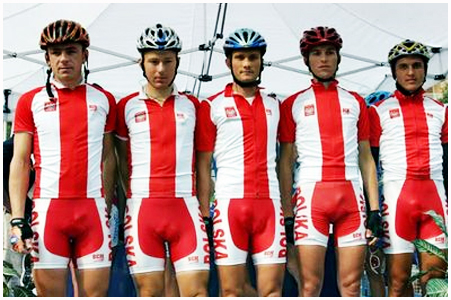
Love this. Courtesy of my friends at Love Your Bike and via the excellent online news site road.cc, I've encountered the marvellous concept of MAMILs (or middle-aged men in Lycra).

Basically the idea is that there's major growth in cycling amongst men of a certain age who, instead of turning to a Porsche or a Harley Davidson as they lurch headlong into their midlife crisis, are buying a high-end bike, peeling on some crotch-hugging Lycra leggings, and then getting out on the road.

The findings are part of a report released in June from Mintel. Amongst the 'highlights' in the report are the fact that the keenest cyclists are most likely to have at least two cars in their household, they're also broadsheet readers and are likely to have an average household income of over £50,000.

And they're mostly blokes. Middle-aged blokes.

So far, so almost fascinating. My own hugely comprehensive survey on the streets of Manchester is that there are a growing number of cycling 'typologies' of which we should be aware:

FFOPs - Floaty Frock on Pashley. This new subset of cyclist is a bloody breath of fresh air. Normal clothes, elegant bike and generally higher regard for the little things like red lights, not mowing down pedestrians and being generally courteous.

NOAF - Nutter on a Fixie. You know who I mean. They're not in Lycra. They're in black skinny jeans. Anarchists on two wheels for whom no piece of roadspace is too tight a squeeze. Love their bikes though. Yum.

BBOYS - BMX with Bumcrack. Why these students are 'commuting' along Oxford Road on those tiny little stunt bikes is beyond me. Apart from the constant flashes of bottom, equally amusing is their insistence in overtaking you whilst frantically peddling their teeny little wheels only to slow down horribly once you hit a straight patch of road. Bless.

Anyway, back to those MAMILs. I've got a problem here. First of all, like my wife I think that Lycra is a privilege and not a right; lots of these boys are NOT equipped to be wearing Lycra and should steer well clear. Furthermore there is a central issue about making all cyclists look like refugees from the Tour de France.

We have to normalise cycling. It's critical! I think those of us for whom cycling is our daily preferred mode of travel have a moral duty, which I would set out as follows:

1. Look normal. Do not wear Lycra and where possible avoid performance clothing. It looks ugly, and sends out a subliminal message to the rest of the world that cycling is an extreme sport. It is not, it is the best way to get from A2B and the weirder we make it look, the less likely people are to join us in the saddle. Grow up, and stop dressing up.

2. Be super-courteous. We should be the very opposite of Lycra banditos and instead be the lovely, lovely knights and knightesses of the road. Let the bus out! Make way for that driver! Stop and give someone directions! And of course, stop at red lights.

3. Embrace elegance. Here of course I'm following a well trodden path set forth by the excellent people at The Tweed Cycling Club and outlets like Rapha. We should make cycling aspirational, desirable and the mode du jour! Now if I could just afford that Timothy Everest jacket, I'd be away. Must also figure out the etiquette of pipe-smoking whilst cycling.

Mintel are right to highlight the MAMIL but rather than jibing at him, he should be challenged, to become an ambassador for cycling, on a mission to get more people peddling. And he could start by choosing to cycle to work, and do so in a way that makes the whole thing seem fashionable, safe and not requiring the donning of an outfit that makes you look like you're either about to jump down a luge run or storm the Death Star.

I'm thinking plus fours and a natty cap might do the trick.

Sunday, 4 July 2010

Mersey Forest takes to the sky...


Had to share this one - a really cute story. We staged a press launch and photocall last week at the Mab Lane Community Woodland for the Mersey Forest and Forestry Commission. My colleagues were there at the break of dawn, inflating (biodegradable) balloons with tags attached full of wildflower seeds.

It was the one and only rainy morning of the week, predictably, but even so more than 30 children from St Brigids, St Albert’s RC and Mab Lane Primary School released the biodegradable balloons filled with wild flower seeds into the air to help plant vibrant patches of wild flowers right across the region and beyond.

The exciting thing came when this appeared on the woodland's blog site:

"I’m a teacher at Highfield Hall Primary School in Chesterfield, Derbyshire. One of the Nursey children I was teaching bought a big bunch of colourful balloons in, having found them on her way to school. The children are going to be planting them on Monday. The Nursery children were very excited and interseted in the story behind the balloons and can’t wait to plant the seeds. What a lovely idea!!"

So our balloons flew up into a soggy sky and made it 66 miles at least. Totally lovely.

The event was staged to mark the completion of the planting of 20,000 new trees to create the Mab Lane Community Woodland on two former brown field sites in West Derby as part of The Mersey Forest.

Tuesday, 22 June 2010

Winning with ENWORKS


Dead chuffed that we've won the contract to deliver communications support to the marvellous people at ENWORKS, the Northwest’s award-winning environmental business support service.

After pitching against a bunch of other agencies (there's some serious and talented competition out there by the way) we've won the three-year contract to help improve the competitiveness and productivity of Northwest businesses by building ENWORKS’ profile, regionally and further afield.

We've been lucky enough to work with ENWORKS before, as they've been going strong since 2001, and have helped more than 10,000 companies to date. ENWORKS is now a leading authority on environmental business issues, providing free support for businesses to become more profitable by reducing their use of CO2, water and materials.

Anyway we think they're fab and it's great to be working with them again. The YouTube clip above is an example of one of our previous campaigns for them, which did not involve harm or injury coming to the businessman involved. Honest.


Wednesday, 16 June 2010

There is an alternative

We've just released our film for Cooperative Fortnight called 'There is an alternative'. We had luminaries from a host of cooperatives come into the studio for the shoot, and I'm dead chuffed with the outcome.

Friday, 4 June 2010

Driving out into a digital age


This is me: I'm a geeky, early adopting cyclist. Love tech, hate cars.

The former is the future, the latter is the smelly, polluting past. Which is why I've got myself in a frothy little lather about a posting on the eminent and fabulous Streetblog in the States. The piece, by Sarah Goodyear, follows up an earlier article in Ad Age about young Americans driving less as they become ever more seduced by the tippity-tap texting and Twittering of the digital age.

The proposition is that a recent decline in registered drivers amongst younger people is coming about as 'the younger generation increasingly sees a wired lifestyle as incompatible with a motorized one'. Quoting one pundit in Ad Age, Streetblog sets out the case:

"William Draves blames the Internet. Mr. Draves, president of Lern, a consulting firm which focuses mainly on higher education, and co-author of "Nine Shift," maintains that the digital age is reshaping the U.S. and world early in this century, much like the automobile reshaped American life early in the last century.

"His theory is that almost everything about digital media and technology makes cars less desirable or useful and public transportation a lot more relevant. Texting while driving is dangerous and increasingly illegal, as is watching mobile TV or working on your laptop. All, at least under favorable wireless circumstances, work fine on the train. The Internet and mobile devices also have made telecommuting increasingly common, displacing both cars and public transit."


Now, I know the reality of some 'tech' on public transport (such as upstairs on the number 86 from Chorlton) is a yoof playing hardcore rap through the tinny speaker on his Nokia rather than elegant young metropolitans Twittering about Derrida but hey, there's something here that's hugely uplifting, not least because so much of this frenzied 'thumb action' is about connections, communications and social media.

Tune in, switch off and buy a ticket. Fabulous.

Tuesday, 11 May 2010

The latest on the Big Woody Plan

Had a great meeting in Wigan today with the nice folks at Northwest Environment Link. I was pitching up with my woodland creation manifesto, the latest version of which you can click through to below. Select 'menu' in the viewer window below and 'full screen' to get full benefit of the marvellous Slideshare.