Showing posts with label Manchester. Show all posts

Tuesday, 25 September 2012

Out, proud and green

I've just discovered what a great job the team at Manchester Pride are doing on making our city's annual gay pride party - one of the biggest and longest running in the UK - into a more sustainable event.

This year was as fabulous as ever, with a bit of science theme thrown in to commemorate the amazing Alan Turing (apparently a “Gayger” counter was featured, as well as a profusion of Turing’s Sunflowers). The Pride team also made huge headway on cutting their waste, too.

They got all the businesses in the cordoned off area for the event to suspend their own waste company collections during the period so they could manage all the waste across the whole site.

Historically it's been difficult to get the bars to split their waste into recyclable and non recyclable due to the fact they are so busy over the weekend, so they took the decision to employ additional staff to go into the bars themselves to collect the bottles and other recyclable waste.

The bars are mainly on a run along Canal Street so the staff went from one bar to another along the strip collecting the waste.

Pride's aim over the last few years has been to increase the amount of waste recycled and five years ago, the recycling rate was approximately 10% - they had some ground to make up.

This year, in total, their waste management company collected 22,700kg of waste and recyclable materials and they recycled a total of 9,590Kg which means the recycling rate was a massive 42.25%, nearly 10% up on last year's figures and a big leap up from 10% five years ago.

Sunday, 1 July 2012

Bikenomics & Manchester

Here's a presentation I gave a few weeks back at the launch of Love Your Bike's manifesto for cycling in Greater Manchester. As ever, the subject of Middle Aged Men in Lycra (MAMILs) was covered...


Wednesday, 22 February 2012

Where's Manchester up to on climate change?

I've just been pulling together a presentation on climate change action across Manchester as part of my job as chair of the city's climate change steering group. All suggestions for other projects very welcome!


Stateofthe city2012
View more presentations from Creative Concern

Monday, 1 August 2011

Greater Manchester signs off 48% carbon target


Imagine that - kicking off a blog posting with a headline that references percentages, targets and an admin process for signing off a strategy; stay awake at the back there!

It's pretty fundamental this one; Britain's second city (Greater Manchester to you and I) has signed off a climate change strategy that sets a pretty ambitious target of 48% carbon reductions by 2020 against a baseline level of 1990.

It doesn't stop there. The strategy covers all the bases, including mitigation, adaptation, green jobs and the need for a cultural shift (low carbon hegemony anyone?). The other cheeky bit lurking under the tarpaulin is an emerging measure for the thrillingly entitled 'Scope 3' emissions. To anyone who doesn't doze off at night with a copy of 'advanced carbon footprinting' clutched to their bosom, these are the emissions that we usually try and ignore: the stuff we buy, the flights we take, the food we eat.

Here's the first glimpse of our 'consumption-based' carbon footprint


The strategy as presented to the Greater Manchester Combined Authority can be downloaded from here. It's still in a stripped down, word-processed, no-frills format, but is well worth having a gander at. The headlines, in essence, are:

 - A rapid transition to a low carbon economy
 - Collective carbon emissions reduced by 48%
 - Be prepared for and actively adapting to a rapidly changing climate
 - ‘Carbon literacy’ will have become embedded into the culture of organisations, lifestyles and behaviours

There's some progress already, with a number of low carbon buildings, a domestic retrofit programme, emerging heat network plans, a green deal project and the introduction of an electric car charging scheme already well underway, but it's only the start.

The other issue for me is that it is a solid step towards getting all ten Greater Manchester authorities onto the same track on climate change. I chair the steering group for Manchester's own plan - 'A Certain Future' - and I know that we could achieve so much more if we all worked together, better, to cut carbon and adapt for the changes that lie ahead.

Sunday, 17 July 2011

Vertical farming in Manchester

I've just emerged from chairing the sold-out Vertical Farm event at Manchester International Festival. We officially unveiled the 'Alpha Farm' project which will seek to transform a disused office block in Wythenshawe into a fully-functioning vertical farm.

Supremely exciting and there are loads more details on our Alpha Farm blog.

The star turn today though, was the amazing and inspiring Dr. Dickson Despommier, the godfather of Vertical Farming and the author of a seminal tome on the very subject. He was brilliant - and braved a very windy and rainy Manchester to be with us from NYC.

Here's his presentation which will give you a little glimpse into what you missed if you couldn't make it:

Mcr_Despommier

And we've made a little film about the whole Alpha Farm thing:


Monday, 18 April 2011

The future of everything...


Have promised our good chums at FutureEverything that I'd post up what they've got planned this year onto the blog. Alongside our vertical farm plans with Manchester International Festival, and the opening of the Brockholes 'unreserved reserve', this is the 'other' high point of the year.

FutureEverything, 11 – 14th May 2011

Arriving in Manchester in May for its sixteenth year, FutureEverything transforms 4 Piccadilly Place into its Conference venue and Art Hub. Meanwhile Umbro Design Studio in the Northern Quarter becomes the ‘living lab’, mixing up live music DJs, workshops and music events across the city, from concert halls to backstreet gems.

Conference

The FutureEverything conference leads our Ideas strand, where visionary speakers explore the interface between technology, society and culture. The FutureEverything Conference continues to bring you the latest debate and visionary ideas around New Mobilities, Open Data and Emotional Computing, brought to you by forward thinkers such as Meg Pickard, Bill Thompson, Kars Alfrink and Sue Thomas. With over 30 events across the city, Showcase is the place to discover the sounds and stars of tomorrow, with emerging talent from across the city and beyond.

Music

The music strand profiles musical pioneers and ground-breaking talent. Acts confirmed to play the festival include Steve Reich, Rob da Bank, Beach House, Warpaint, 65daysofstatic, Gang Gang Dance, Black Heart Procession, Das Racist, The Radio Dept., Star Slinger, Dark Dark Dark plus many more.

Arts


The art programme features world premieres and urban interventions, including new work by Me and The Machine.

Main exhibition 

The Data Dimension, features artists exploring the flourishing field of data visualisation. Manchester citizens are invited to participate in the OurCity mass participate experiment by Adam Nieman. And the most inspirational digital innovations are celebrated in the FutureEverything Award 2011.


For more information click here.


Tuesday, 12 April 2011

Yuri Gagarin in Manchester


It’s fifty years since a plucky and rather diminutive Yuri Gagarin shot into space, cooped up in a contraption with the computing power of your average remote control, and what I really love is the fact that during his victory tour, he made a major splash in Manchester, only his second stop outside the Soviet Bloc, following the flight into space.

The stop-off had a lot to do with the fact that Yuri was a former foundry worker, and so the Amalgamated Union of Foundry Workers in Manchester decided to invite the now world-famous cosmonaut to come and visit Manchester in July 1951.

As he emerged from his RAF plane at Ringway Airport, it was raining (I know, I know) and he apparently asked for the car’s top to be rolled down, saying: “If all those people are getting wet to welcome me, surely the least I can do is get wet too!”

He was pretty much mobbed on his arrival by a crowd that included the then ‘Mayor of Stretford’. He then drove through Moss Side to the Union’s HQ, where his car was reported showered with ‘red roses, poppies and carnations’ and, this is my favourite bit, was presented with a specially designed medal that to my eye could have been the early work of Comrade Saville, if he’d been around at the time. It included the slogan ‘Together Moulding a Better World'.

He also stopped at Metros works in Trafford Park and was lunched by the great and the good at Manchester Town Hall, where he met Sir Bernard Lovell, who said: “He will become one of the historic figures in civilisation because he is the first man to live in a new environment. There are lots of things I would like to ask him, but probably he would not answer them.”

There are two pieces of press copy surrounding the visit that I like. First of all the Manchester Evening News which wrote how ‘Major Gagarin is above the tedious enmities of politics. His was a human achievement; a victory for man's spirit and courage’, but there was an even lovelier line in Pravda, which makes me a little weepy: 'Manchester's toiling masses accorded Major Gagarin a reception unsurpassed in its cordiality. Never over the past many tens of years has Manchester met anybody with such an embrace’.


Thursday, 17 March 2011

Manchester's Vertical Farm

Goodness me it's been hard keeping this one quiet. We've been very, very lucky at Creative Concern HQ to be working with the Manchester International Festival on a proposed vertical farm, right here in Manchester, housed within a transformed office block.

We've worked on the feasibility with sustainable food expert Debbie Ellen, Capital Relations and, naturally, our brilliant friends at Urbed.

More details eventually... but for now, here's Urbed's visual schematic as a 'taster' and I suggest you all book your tickets for the awesome Dickson Despommier!


Thursday, 3 March 2011

iManc*


NOTE: email digitalmap@marketingmanchester.com if you think you should be on our next map of Online Manchester!
__

There’s an urban myth about Manchester and computers that I am utterly beguiled by.

It goes like this.

Alan Turing, University of Manchester academic, father of modern computing and closet homosexual took his own life in 1954.

The myth has it that the cyanide he used was in an apple, which was then left, with a bite taken out of it, on the stand next to his death bed.

Fast forward to the late 70s and Steves Jobs and Wozniac are busy in a garage, building what will become the Apple computer. They need a logo for the company. After an early flirtation with an Isaac Newton cartoon they go for an apple, with a bite taken out of it.

And there you have it. Apple’s homage to Turing as they half-knowingly created a leading global brand of the future, complete with a hardline back to the original modern city of Manchester.

None of which is true of course, but as memetic messages go, it’s one that spreads the second you tell it. It’s irresistible, I hereby dare you not to mention it to someone.

I like to think it is true, in fact I insist it is, as I love to see my favoured brands united in some way. Manchester plus Apple is a kind of dream combo for me; if I could see brand collisions of Monocle Magazine and Paul’s Tofu, or maybe Bourgeois Boheme and Rapha, I’d be a very, very happy man.

But back to memetics.

How ‘stuff spreads’ is on my mind as I ponder the next phase of our work on Manchester’s digital map. Last year we researched, and then depicted on an interactive map, a cross-section of the websites and blogs that collectively make up our city’s online presence – our pixelated tendrils if you will.

We did the research, created the map, and now we’re asking an elite cadre of bloggers and tweet-happy social media types to comment on the notion of ‘online presence’ and more specifically, tell us and Marketing Manchester, our client, where the project should go next. 

It seemed the right way to go about it really. It means we want you, dear reader, to tell us what YOU think.

In the process we’d like to uncover some more things we didn’t know about Manchester online, generate some insights into how cities should approach their digital ‘brand’ experience, and maybe we’ll even see some more urban myths, spreading out through the ether, next up from me, the one about how Manchester invented dance music.

*As well as the title of this blog entry, this is also the slogan emblazoned on the best selling T-Shirt at Manchester Airport. You can buy one here.

Postscript: Makes you proud to be a BritGeek. In September of last year, following a frenzied campaign on the Internet, the then Prime Minister Gordon Brown  issued a public apology on behalf of the British government for the way in which Turing was treated after the war.

Sunday, 13 February 2011

We are each of us tourists in the original modern city

GM tourism review
A couple of years ago, I helped Visit Manchester - Greater Manchester's Tourist Board - write and publish a tourism strategy for the city region which I hope set out some of the critical challenges and opportunities that existed for what those in the know call the 'visitor economy' across our wonderful ten boroughs.

We're now busy, again with Visit Manchester, reviewing that strategy and doing a bit of an update report on how the sector has been doing.

The headlines? Well, the sector is holding its own with visitor numbers up a little over the last couple of years, but I think it would be fair to say that some of our core challenges, such as a diversification of the nighttime economy, still stand. Email me if you have thoughts, or post a comment.

And as an aside, I thought I'd include a quick comment on why I think this is so earth-shatteringly important.

First of all, I am passionate about a vibrant visitor economy being a fundamental part of creating a sustainable city. If we are inspired and are acquiring new knowledge and new experiences, then we are, for my money, more likely to make the connections and take the actions necessary to create a better future for our children.

Second thing - no surprise here - is climate change related. If we make our tourism product utterly irresistible and of the highest quality, then more of us will opt for 'staycations' and will avoid barfing out vast amounts of carbon going on mini-breaks and piss-ups in far flung locales.

Third - Manchester. Getting the experience of our city right is critical if we want to be a player. We want talented graduates to stay here? We need to be vibrant. We want people to invest here? We need to be vibrant. We want the jaded and over-indebted souls in the South East and London to do the smart thing and move up to the Original Modern City? We need to be vibrant, and different, and good.

So that's why I care about this stuff... but back to the review... comments if you have them are gratefully received.

Wednesday, 5 January 2011

Charting our course for a certain future


New year, new plans to save the world... but first a look back, finally, at the big bash that took up a good deal of my time at the tail end of 2010 - the first stakeholder conference for ‘Manchester: A Certain Future’, which took place at the revitalised Museum of Science and Industry (MOSI) on 30 November 2010.

(M:ACF in case you're wondering, is Manchester's Climate Change Action Plan, which I had a hand in helping to write in 2009.)

Back to MOSI, though. Delegates from a host of different organisations and sectors took part in a hands on, highly interactive day of workshops, debates and networking sessions designed to help all of those attending to share their plans for the future, identify what was working (or not) in the fight against climate change and to make fresh connections with possible future partners.

The shape of the day was deliberately experimental, from an art session where participants were given the opportunity to literally draw what a low carbon culture looked like, to ‘carbon dating’ where the focus on was on a series of quick fire meetings with new people to share ideas and thoughts for the future. There was also a masterclass on low carbon regeneration and a series of sessions where delegates shared the barriers they had overcome, or their plans for the future.

Future scenarios

As well as chairing the day, I had the chance to run two 60-person sessions with Joe Ravetz of the University of Manchester to focus peoples’ minds on that certain future, using the scenarios (good and bad) that have been created by the University’s Eco Cities research team. The two scenarios – an Upward Spiral and a Long Descent - were brought to life by fictional radio broadcasts from the future crafted by Phil Korbel of Radio Regen and then participants voted on how they thought Manchester stood in the face of such changes.

The good news? Few participants thought that our city is on a collision course with certain disaster, by stating that they thought the future set out in a Long Descent was a sure thing. In fact in both sessions, half or more of those taking part stated that they thought Manchester was a headed in the right direction, to some degree.

When we asked in what areas we were strong or weak in the face of climate change, those taking part felt that we had a good track record on technology and innovation an that we had strong political leadership driving us forward. Where were judged to be weaker, by those voting, was on a shared set of public values around climate change, and on working towards a more equal society.

What next?

Shared values and developing a low carbon culture were the clear priorities that emerged from the day, including a final concluding vote from delegates that gave our stakeholder steering group a clear mandate to push for this as a focus for 2011.

Attendees also told us how they thought we could improve the conference for 2011, including building in more advanced notice of the event, improving the diversity of the event (though a number of attendees remarked on how it wasn’t the ‘usual suspects) and to create a greater presence for the event in the conventional media, as well as the Twitter reports that were a feature of the day, thanks to Inside the M60.

Tuesday, 4 January 2011

Get me toasty


Today we (Creative Concern, as opposed to the wider human race) helped to launch a campaign to get homes across Greater Manchester warm and toasty. The client is AGMA, the Energy Savings Trust and the 10 local authorities. The scheme provides grants for basic insulation measures in your home if you live in Greater Manchester and it's genuinely unbeatable:

  • Free no obligation energy survey by an accredited assessor
  • Home insulation improvements for as little as £50
  • Free cavity wall and loft insulation if you are over 60 OR on eligible benefits OR pregnant OR have a child under 6 

Full details are on the website we've built for them - http://www.getmetoasty.com - and as I type, my colleagues are racing around with our giant 'Mr Toast' character, preparing the radio ads and getting ready for two weekends of fun and frolics in the Trafford Centre and Arndale. Marvellous stuff.

And my favourite part of the campaign so far? Hooking up with the awesome, LA-based creator of 'Mr Toast' who is our collaborator on this project.


Saturday, 11 September 2010

The Forests of TAFKAR*


I've been working on a plan, recently, to get some more trees in the ground. Nothing new there to anyone who has visited this blog before, but I thought it was time for an update.

I chair the Northwest Forestry Framework (soon to change it's name to something more in keeping with the political zeitgeist, but more on that another time) and have been working with a whole host of people, both in the Northwest but also in the national offices of the Forestry Commission, to put forward several areas in the Northwest as possible pilot areas for a major national push on woodland creation.

As an area of England with a level of woodland cover well below the national average, there is scope and opportunity for large scale tree planting and development right across Cumbria, Lancashire, Greater Manchester, Cheshire and Merseyside. When you look at the statistics, we are poorly served in these areas when it comes to woodlands.

The good news is that each of these areas has also developed clever and canny new models for woodland creation that deliver multiple benefits and move beyond traditional public sector investment models towards partnerships with business and the voluntary sector.

It's all very, 'Big Society'.


Now these areas are signing up to a ‘forestry manifesto' that I've been touting around the region since the start of the year. This manifesto seeks, over 40 years, to deliver a doubling in woodland cover, to have an immediate and significant impact on carbon stores, timber production, environmental resilience, green jobs, local image and happiness and wellbeing; this is a vision of an intensely productive, as well as beautiful, landscape.


Show me the money

It all sounds very motherhood and apple pie, but who is going to pay? There are a number of existing or planned investment models across the Northwest which warrant further development and replication elsewhere. These include:

• Woodland planting as a key aspect of PFI (Public Finance Initiative) contracts and, specifically, waste management strategies;

• Working with large-scale developers to create an attractive setting for investment and adding value to land-based asset portfolios;

• Practical business partnerships providing improved local area ‘image', biomass resources or climate change adaptation;

• Woodland or green infrastructure bonds, where investors can support woodland creation by investing in a bond that provides non-fiscal benefits in lieu of interest payments as part of a CSR or sustainability strategy;

• Developing a suite of woodland creation opportunities alongside community interest levies/section 106 arrangements where developers support environmental works as a condition of their planning consents; and

• Integrated land use planning to maintain and improve water quality.

• Landscape-scale, economically-linked programmes to aid recovery and local economic resilience.

Some of the above options sound a little jargon laden, but they have the potential to help us get some trees in the ground, and that's what I care about. Each of these investment models is either already in play across one of our counties or city regions, or is ready to be developed by one or more partners.

Breaking down barriers

From the discussions we've been having so far, these partners are ready to start delivering woodland creation, on the ground, if certain barriers to progress can be removed. These barriers include:

• The ‘Hope value' attached to under-utilised land and the misplaced notion that new woodlands permanently remove large areas from possible future development;

• More flexible, short to medium term land use deals and frameworks that will allow the notion of ‘temporary' woodland to be pursued;

• Clear signals on the future of carbon pricing and accounting in relation to woodland creation;

• The lack of a mechanism for business to report on the carbon benefits of woodland creation programmes as part of their net greenhouse gas emissions; and

• The consideration of effective tax regimes to encourage investment in new planting in areas of need as a way for business to play a part in 'big society' programmes.


Making it happen

So the exciting thing is that if we bash down a few barriers, win over some hearts and minds, and pull our fingers out, the partners in the Northwest Forestry Forum are ready to begin work piloting a new wave of woodland creation using innovative funding and delivery models such as these.

More trees, in the ground, delivering a huge range of benefits.

And the track record for delivery across the region is solid and impressive, with the Community Forests (e.g. Mersey Forest and Red Rose Forest) having already planted 12 million trees and millions more having been planted through the Forestry Commission's Capital Modernisation Fund and Newlands programme.

Here are some more tangible examples of where can start planting.

Real life example - Mersey Belt

There is an immediate opportunity for an ‘Adapting the Landscape' pilot across what has been coined the ‘Atlantic Gateway', connecting the twin city regions of Greater Manchester and Merseyside with the Northern areas of Cheshire.

Such a pilot would be focused on woodland creation in and around key physical development sites and along transport corridors; on productive forestry including biomass; on leisure, recreation and the ‘visitor economy'.

Funding can be drawn from business through receipts from soils deposition, community interest levies, Section 106 agreements, through an easing of planning constraints if the creation of greenspace is assured and possible short-term amnesties against business tax.

Delivery partners would include large development businesses in the area, as well as the key Local Enterprise Partnerships and the voluntary sector in the form of community forests and Groundwork.

Real life example - Lancashire

In Lancashire there is already an innovative model for woodland creation in the form of the county's ‘Woodlands from Waste' programme linked to a soon to be commissioned, 25 year, £2 billion Waste PFI.

A partnership of Lancashire County Council, 13 Local Authorities and their commercial contractor, Global Renewables, alongside the Forestry Commission, will be planting and managing 100,000 new trees per year for the next 25 years - creating woodland on brown and greenfield sites across the area. The cost is being met through savings on landfill taxes and, in addition, is utilising a growing medium by-product of the waste treatment process.

Real life example - Cumbria and Lancashire

Water company United Utilities has pioneered a programme called the Sustainable Catchment Management Programme (SCaMP), working with farmers and land managers, local authorities, Government and other conservation organisations to influence how water catchment areas are managed and properly funded. The objective is a double win of improved water quality (under the European Water Framework Directive) as well as conservation of the natural environment. UU's partner in the programme has been the RSPB.

The project has leveraged in public funding to help deliver an increase in clough woodland, with 450 hectares of upland oak woodland to be planted, some 300,000 trees being planted and 200km of fencing to allow for moorland restoration and woodland planting. It has carried out the work in two of its four estate areas: Bowland in Lancashire, and the Southern estate including Longdendale, the Goyt and parts of the Peak District.


Meeting Defra's priorities

It may sound a bit arcane, but in the absence of any major eco bills or statements, there are still some clear signals as to what the new government's priorities are, not least in the departmental 'Structural Reform Plans' which have beenpublished. How does the above outlined activity ‘fit' with the three key priorities outlined in Defra's structural reform plan?

The woodland creation opportunities highlighted can directly contribute to and foreshorten the delivery of each priority and relevant actions and milestones. Specifically:

Support and develop British farming and encourage sustainable food production

Defra's objective is to enhance the competitiveness and resilience of the whole food chain, including farms and the fish industry, to ensure a secure, environmentally sustainable and healthy supply of food with improved standards of animal welfare.

Woodland creation can contribute to this objective in a number of ways. It will provide affordable measures of support for hill farmers via diversifying farm incomes e.g. through timber sales and reduced energy cost savings through woodfuel.

It will also help with animal husbandry, particularly in the uplands, primarily through the provision of shelter. Woodland creation will also lead to more sustainable, integrated land use where for example, higher value agricultural land holdings can be protected through woodland creation ‘upstream' stablising soils and alleviating flooding.

Biodiversity and landscape

Defra's objective is to enhance and protect the natural environment, including biodiversity and the marine environment, by reducing pollution and preventing habitat loss and degradation.

A pilot of new woodland creation in the Mersey Belt, Cumbria or Lancashire will contribute to this in a number of ways.

It will deliver more green spaces for local communities, new native habitats and wildlife corridors needed to help wildlife adapt to expected climate change impacts. It will help stabilise soils, improve water quality and reclaim damaged, brownfield land. In addition there will be increased tree planting by private sector and civic societies.

Support a strong and sustainable green economy, resilient to climate change

Defra's objective is to encourage businesses, people and communities to manage and use natural resources in a sustainable manner and to reduce waste; and work to ensure that the UK economy is resilient to climate change.

A woodland creation pilot will directly address this objective, as the approaches above show, it can directly provide a source of carbon storage and can be deployed in partnership with the private sector.


Next steps

As you might imagine, I'm dead keen to play these arguments out to national players - especially Defra - but also to the emerging Local Economic Partnerships which have been causing such a stir in local politics over the last few weeks.

In addition, this proposal will be the centrepiece of our next meeting of the Forestry Forum on November 8 of this year; if you want to come along, just let me know. We need every bit of help we can get to achieve that goal we've set for ourselves - a doubling of woodland cover.


...

*TAFKAR = The Area Formerly Known as Region.


Monday, 19 April 2010

Dwight Towers on academics


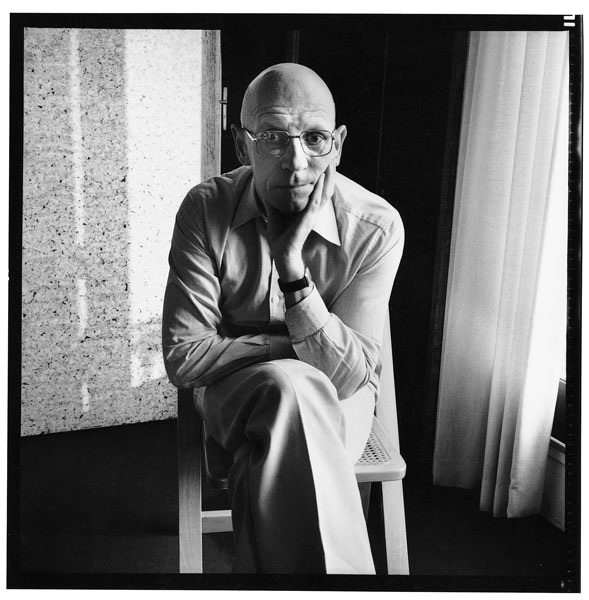
Okay, I'm married to an academic and she is the absolute fulcrum, focus and filigree of my life, but I had to pass on the wise, wise words of Manchester's very own Dwight Towers. In the latest DT blog post there is a rip-roaring sideswipe on academics, citizen participation in Manchester and on the journey you'll encounter Foucault's notion of 'governmentality'. All I can say is that it is a fine way to start the week and gives me an excuse to use a picture of Michel Foucault.


Tuesday, 30 March 2010

The City Region Project


Last night the world shifted, a little. Stockport joined the other nine local authorities across Greater Manchester and agreed to establish a combined authority for the ‘city region’ of Manchester.

I know, it sounds like a mouthful, and that’s even before you start talking about ‘Economic Prosperity Boards’ or ‘Agglomeration Economies’.

Put simply the Combined Authority is a permanent and statutory body that has powers over some fairly major issues like transport, planning, regeneration, skills and employment. Critically it will also (hopefully) make sense of Greater Manchester’s work on tackling climate change and creating a low carbon economy.

We don’t get the fun and games of an elected Mayor, which I’m a little disappointed at, given that such a figure would, to my mind, give us more ‘punch’ nationally and internationally. Instead we’ll get a slight reshuffling of AGMA deckchairs to create a city region executive (stay awake at the back there!).

If like me, you’ve been traveling on the slightly dilapidated trolley bus of devolution for some time (I was part of the aborted ‘YES’ for devolution campaign a number of years ago), then this is all a step in the right direction. We don’t have enough power, Whitehall doesn’t always serve us well, and there is far too little accountability at the regional level, in spite of the good job that our Regional Development Agency has done.

But that last point is critical. This has to boost the transparency of power.

If I’m honest, I think the workings of AGMA (the Association of Greater Manchester Authorities) to date have been related to the world at large with all the compulsion and flare of an incarcerated scoundrel scratching out days on the wall of his cell. Either that or a narcoleptic let loose with a word processor. Dig deep into the bowels of the web and you will find AGMA minutes, impenetrable research reports, crunchy and badly rendered maps.

You won’t find anything exciting. Trust me.

So that’s what we need to pull off now. We need to make this next great phase for the city Disraeli described as ‘the most wonderful of modern times’ a compelling, high profile tour de force. It needs to set the world alight. It needs to set a different model for our future prosperity.

Most importantly it needs to communicate. If it’s back to somnambulant business as usual, I’m off the bus.

Monday, 29 March 2010

Co-operating on carbon in Moss Side

A few years ago we (Creative Concern and chums) launched Manchester is My Planet to generally positive noises nationally and regionally; the key to the whole endeavour was the very simple idea that a big, hairy, global problem like climate change possibly could be solved if you made it local, relevant and fused to a greater sense of civic pride. Later on this was an approach which we also adopted when helping to get Foundation launched.

It's a straighforward bit of thinking: climate change and melting planet - very scary - can result in paralysis through fear and dispair - not good! Local action, down your street, by people you recognise is not scary but really 'do-able'. People not scared. People empowered. Planet saved.

That's the theory, and I reckon it's sound.

Anyway the latest outing for this thinking is the fabulous new Carbon Co-op in South Manchester (more specifically Moss Side). The idea is a new, low carbon social enterprise that helps neighbourhoods co-operate to save energy and money. The Co-op launched on Saturday and will kick off across two Moss Side streets with residents working together on bulk-buying low carbon technologies, insulation, energy monitors and other such green gizmos.

The Carbon Co-op is being supported by NESTA's Big Green Challenge Fund and Manchester City Council's Carbon Innovation Fund and it includes a very good 'manual for living' that I'd recommend to anyone. Having tried on many an occasion to make climate change palatable, understandable and compelling on the printed page, I love to see it done well, and right. The project has a bunch of other people I respect involved, including one of the team behind 'Wythenshawe Forever' (Jonathan Atkinson) and the brilliant Charlie Baker from Urbed.

Tuesday, 19 January 2010

Covering up for the Whitworth


The new wallpaper exhibition at the Whitworth - Walls Are Talking - launches in February and our team at Creative Concern have been hard at work designing the promo campaign for the show, which we’re really proud of.

Walls Are Talking is the first exhibition of its kind in the UK, featuring wallpapers by more than 30 internationally known artists including Andy Warhol, Damien Hirst and Niki de St. Phalle. Already well known for its wallpaper collection, the Whitworth is pulling together a genuinely challenging show and we knew that the campaign to promote it had to be every bit as edgy.

We worked with the City’s Creative Director, Peter Saville and photographer Graeme Cooper to produce the artwork, which directly responds to some of the core themes that the exhibition explores: subversion, sexuality and imprisonment.


The image (see above) features a portrait shown from below the eyes. It is an anonymous face with the mouth torn away revealing a layer of wallpaper. We wanted to capture the concept of the exhibition which is the idea of something passive taking over; ‘if only the walls could talk’.

Wallpaper was on my mind over Christmas actually, when I listened again to Stephen Fry’s ‘blessay’ on aesthetics and Oscar Wilde. In the podcast he recounts the time when Wilde was asked his view of the United States, famously responding that the reason that the US was such a violent, brutal place was because its wallpaper was so ugly.

As Stephen Fry then draws out, this is typical wildean flippancy at first hearing but actually stems from a deep belief in aesthetics and, critically, in the aesthetics of the everyday. It is the notion that if we care about design and quality and beauty then it will lift the spirits, enrich the human condition, make the world a better place.

Which is one reason why I’ll be just as focused on the Whitworth’s huge collection of ‘everyday’ wallpapers spanning several centuries, as well as the pieces submitted by the big name artists. Good design, and beauty, is something we should encounter from the moment we wake until the moment we finally stop Twittering and nod off to sleep.

And everyday aesthetics - finally - takes me back to one of my great Whitworth moments. The gallery has always been one of my favourites spaces, for over 20 years now. When I was a student I was there often, and one day a huge school group arrived to fill in work sheets, make some drawings and chatter their way through the galleries. As they emerged into the space, confronted by the rich collection of work, one of the children looked down, not up, and belted out the most lovely refrain: “What a beautiful floor!”
_

Walls Are Talking opens on February 6 and runs until May 3 and is collaboration with the V&A Museum. It includes specially commissioned work from artists Michael Craig-Martin and Catherine Bertola.

Thursday, 14 January 2010

Love your bike... just don't take a tram


Here's a good quote for a dark and frosty winter's day, it's from Arthur Conan Doyle:

“When the spirits are low, when the day appears dark, when work becomes monotonous, when hope hardly seems worth having, just mount a bicycle and go out for a spin down the road, without thought on anything but the ride you are taking.”

Lovely... but just don't try and get on a tram when those legs get a little tired, as it looks like Greater Manchester is about to vote to continue its ban on tram-borne bikes.

It pains me to say it, but when it comes to bikes on the metro, London can do it. In fact a host of other cities can manage it. Here's just a snapshot of light rail or tram services around the world that let cyclists on board:


Vienna
Sydney Light Rail
Brussels
British Colombia SkyLink
Calgary Transit
Prague
Copenhagen Metr
Lille – Transpole
Berlin BVG
Bielefeld moBiel
Frankfurt VGF
Hannover USTRA
Munchen MVV
Nurnberg VGN
Stuttgart SSB -
Amsterdam GVB
Rotterdam RET
Charlotte LYNX
Dallas Area Rapid Transit
Denver RTD
Miami Dade County Transit
Minneapolis MetroTransit
Phoenix Valley Metro
Portland Trimet
St Louis Metro

So there you go; not impossible; which was actually the conclusion of the Greater Manchester Authorities in 2002 when they “unanimously agreed to the principle of allowing bikes on trams during non-peak hours”.

Understandably, our friends at the Friends of the Earth-run Love Your Bike campaign are not best pleased. They think that allowing bicycles to travel on off-peak trams would encourage more people to combine tram and cycle journeys for commuting, shopping and leisure, and be an effective way to reduce carbon emissions. This argument is given greater power once they point out that Greater Manchester's own transport strategy suggests that between 2 and 5 miles is a perfect cycling distance, and that around 90% of the Greater Manchester population will soon be within a 2.5 mile cycle ride of a tram (when the hugely welcome new Metrolink services are completed).

The vote on this takes place tomorrow and Love Your Bike is calling on anyone who can to urge the GMITA committee members to honour the pledge made in 2002 and vote to allow cycle carriage on off-peak cycle trams. If you fancy adding your voice, click here to send them an email.

Tuesday, 8 December 2009

Manchester. A Certain Future.


Tonight we officially launched Manchester's new climate change action plan with the help of Ed Miliband, shortly before he disappeared off to Copenhagen.

Creative Concern worked with M Four and Manchester City Council on drafting the plan, editing the final text and we also built the plan's website.

We're very proud of the plan but even more proud of our city for signing up to some bold targets including the headline target of a 42% cut in CO2 emissions before 2020. Bold stuff, and as we wrote in the plan, if the world's first and definitive industrial city can get to grips with climate change then no city, anywhere else in the world, has any excuse to leave this issue in the tray marked 'too difficult'.


Tuesday, 1 December 2009

Guerilla Lighting in Manchester

Photos of a guerilla lighting 'action' led by BDP in Manchester during December 2009. The photo is of an illuminated railway arch just near the old UMIST campus. More photos at Martin Lupton's dedicated Guerilla Lighting blog. There also more images at Walter Menzies' blog.