Thursday, 14 October 2010

Peace and love, Liverpool style

The world's media at the launch of the European Peace Monument
It was a busy weekend for the Creative Concern PR team. On Saturday (9th) we handled the global PR launch of a European Peace Monument gifted to Liverpool by the Global Peace Initiative (and created by artist Lauren Voiers) on what would have been John Lennon’s 70th birthday. We were commissioned by Liverpool’s Beatles Story attraction and also worked with the City, and with Liverpool One.


The event centred around the 18ft monument which was unveiled by Julian and Cynthia Lennon in the city’s deeply lovely Chavasse Park (one of my favourite bits of new green infrastructure across the region). The launch was attended by dignitaries from all over Europe and captured by the world’s media.

Unveiled live worldwide on BBC News 24 and Sky News the broadcast was syndicated nationally by CBS in the USA for live transmission on the popular ‘The Early Show’ reaching a global audience of millions. NBC in the USA, Russia’s NTV channel, Japan’s KGL, China’s CNC, Germany ZDF and Italy’s RAI attended creating packages of interviews from the live event.

http://www.youtube.com/watch?v=7MqYBSTR-Ps

In addition the story and images received blanket coverage around the world in print media from The Sunday Times and News of the World through to USA Today and the Wall Street Journal. The team here at Creative Concern also engaged directly with a global audience through social media.

I don't often do blatant trumpet blowing on this blog, but I'm dead chuffed by this one, and by the efforts of our super, fabulous and quietly dapper media team.

Also chuffed that it's all about... peace.

Tuesday, 12 October 2010

What is Creative Concern?

I've recently been called upon to explain myself. Quite right too. Embedded below is a trolley dash through the chaos that is my head. It starts with a bit about why and how we do what we do at Creative Concern, before moving onto some of our bits of work 'out there' in the real world that we love so much.

As is ever the case, it's an evolving pitch so if there are any bits that could do with improvement, please send your thoughts in now on the back of stamped addressed envelope.

Tuesday, 5 October 2010

Can museums save the world?

I'm off to deliver a 'provocation' tomorrow morning at the annual Museums Association conference here in Manchester. My pitch – no huge surprise here - is whether museums can help chart our collective course into the future, deliver greater levels of environmental sustainability and deliver major societal change. Not asking too much there, then!

With the rest of the team at Creative Concern I've been lucky enough to work with loads of cultural organisations over the last few years, such as the Whitworth Art Gallery, Manchester Museum, the Museum of Science and Industry and Renaissance Northwest. They're all amazing institutions and people, and I'm genuinely in awe of their potential to reach out and touch people, to open minds and, possibly, help us create a better world. Even in the 'Age of Austerity' there can be no other mission with such singular importance.

In putting the pitch together for tomorrow, I found myself particularly absorbed by the work of the Center for the Future of Museums in the US. They've done some great 'futurology' work recently and I think that they're a fine model to follow; the 'Tomorrow in the Golden State' report is worth reading, if you have the time.


Saturday, 11 September 2010

The Forests of TAFKAR*


I've been working on a plan, recently, to get some more trees in the ground. Nothing new there to anyone who has visited this blog before, but I thought it was time for an update.

I chair the Northwest Forestry Framework (soon to change it's name to something more in keeping with the political zeitgeist, but more on that another time) and have been working with a whole host of people, both in the Northwest but also in the national offices of the Forestry Commission, to put forward several areas in the Northwest as possible pilot areas for a major national push on woodland creation.

As an area of England with a level of woodland cover well below the national average, there is scope and opportunity for large scale tree planting and development right across Cumbria, Lancashire, Greater Manchester, Cheshire and Merseyside. When you look at the statistics, we are poorly served in these areas when it comes to woodlands.

The good news is that each of these areas has also developed clever and canny new models for woodland creation that deliver multiple benefits and move beyond traditional public sector investment models towards partnerships with business and the voluntary sector.

It's all very, 'Big Society'.


Now these areas are signing up to a ‘forestry manifesto' that I've been touting around the region since the start of the year. This manifesto seeks, over 40 years, to deliver a doubling in woodland cover, to have an immediate and significant impact on carbon stores, timber production, environmental resilience, green jobs, local image and happiness and wellbeing; this is a vision of an intensely productive, as well as beautiful, landscape.


Show me the money

It all sounds very motherhood and apple pie, but who is going to pay? There are a number of existing or planned investment models across the Northwest which warrant further development and replication elsewhere. These include:

• Woodland planting as a key aspect of PFI (Public Finance Initiative) contracts and, specifically, waste management strategies;

• Working with large-scale developers to create an attractive setting for investment and adding value to land-based asset portfolios;

• Practical business partnerships providing improved local area ‘image', biomass resources or climate change adaptation;

• Woodland or green infrastructure bonds, where investors can support woodland creation by investing in a bond that provides non-fiscal benefits in lieu of interest payments as part of a CSR or sustainability strategy;

• Developing a suite of woodland creation opportunities alongside community interest levies/section 106 arrangements where developers support environmental works as a condition of their planning consents; and

• Integrated land use planning to maintain and improve water quality.

• Landscape-scale, economically-linked programmes to aid recovery and local economic resilience.

Some of the above options sound a little jargon laden, but they have the potential to help us get some trees in the ground, and that's what I care about. Each of these investment models is either already in play across one of our counties or city regions, or is ready to be developed by one or more partners.

Breaking down barriers

From the discussions we've been having so far, these partners are ready to start delivering woodland creation, on the ground, if certain barriers to progress can be removed. These barriers include:

• The ‘Hope value' attached to under-utilised land and the misplaced notion that new woodlands permanently remove large areas from possible future development;

• More flexible, short to medium term land use deals and frameworks that will allow the notion of ‘temporary' woodland to be pursued;

• Clear signals on the future of carbon pricing and accounting in relation to woodland creation;

• The lack of a mechanism for business to report on the carbon benefits of woodland creation programmes as part of their net greenhouse gas emissions; and

• The consideration of effective tax regimes to encourage investment in new planting in areas of need as a way for business to play a part in 'big society' programmes.


Making it happen

So the exciting thing is that if we bash down a few barriers, win over some hearts and minds, and pull our fingers out, the partners in the Northwest Forestry Forum are ready to begin work piloting a new wave of woodland creation using innovative funding and delivery models such as these.

More trees, in the ground, delivering a huge range of benefits.

And the track record for delivery across the region is solid and impressive, with the Community Forests (e.g. Mersey Forest and Red Rose Forest) having already planted 12 million trees and millions more having been planted through the Forestry Commission's Capital Modernisation Fund and Newlands programme.

Here are some more tangible examples of where can start planting.

Real life example - Mersey Belt

There is an immediate opportunity for an ‘Adapting the Landscape' pilot across what has been coined the ‘Atlantic Gateway', connecting the twin city regions of Greater Manchester and Merseyside with the Northern areas of Cheshire.

Such a pilot would be focused on woodland creation in and around key physical development sites and along transport corridors; on productive forestry including biomass; on leisure, recreation and the ‘visitor economy'.

Funding can be drawn from business through receipts from soils deposition, community interest levies, Section 106 agreements, through an easing of planning constraints if the creation of greenspace is assured and possible short-term amnesties against business tax.

Delivery partners would include large development businesses in the area, as well as the key Local Enterprise Partnerships and the voluntary sector in the form of community forests and Groundwork.

Real life example - Lancashire

In Lancashire there is already an innovative model for woodland creation in the form of the county's ‘Woodlands from Waste' programme linked to a soon to be commissioned, 25 year, £2 billion Waste PFI.

A partnership of Lancashire County Council, 13 Local Authorities and their commercial contractor, Global Renewables, alongside the Forestry Commission, will be planting and managing 100,000 new trees per year for the next 25 years - creating woodland on brown and greenfield sites across the area. The cost is being met through savings on landfill taxes and, in addition, is utilising a growing medium by-product of the waste treatment process.

Real life example - Cumbria and Lancashire

Water company United Utilities has pioneered a programme called the Sustainable Catchment Management Programme (SCaMP), working with farmers and land managers, local authorities, Government and other conservation organisations to influence how water catchment areas are managed and properly funded. The objective is a double win of improved water quality (under the European Water Framework Directive) as well as conservation of the natural environment. UU's partner in the programme has been the RSPB.

The project has leveraged in public funding to help deliver an increase in clough woodland, with 450 hectares of upland oak woodland to be planted, some 300,000 trees being planted and 200km of fencing to allow for moorland restoration and woodland planting. It has carried out the work in two of its four estate areas: Bowland in Lancashire, and the Southern estate including Longdendale, the Goyt and parts of the Peak District.


Meeting Defra's priorities

It may sound a bit arcane, but in the absence of any major eco bills or statements, there are still some clear signals as to what the new government's priorities are, not least in the departmental 'Structural Reform Plans' which have beenpublished. How does the above outlined activity ‘fit' with the three key priorities outlined in Defra's structural reform plan?

The woodland creation opportunities highlighted can directly contribute to and foreshorten the delivery of each priority and relevant actions and milestones. Specifically:

Support and develop British farming and encourage sustainable food production

Defra's objective is to enhance the competitiveness and resilience of the whole food chain, including farms and the fish industry, to ensure a secure, environmentally sustainable and healthy supply of food with improved standards of animal welfare.

Woodland creation can contribute to this objective in a number of ways. It will provide affordable measures of support for hill farmers via diversifying farm incomes e.g. through timber sales and reduced energy cost savings through woodfuel.

It will also help with animal husbandry, particularly in the uplands, primarily through the provision of shelter. Woodland creation will also lead to more sustainable, integrated land use where for example, higher value agricultural land holdings can be protected through woodland creation ‘upstream' stablising soils and alleviating flooding.

Biodiversity and landscape

Defra's objective is to enhance and protect the natural environment, including biodiversity and the marine environment, by reducing pollution and preventing habitat loss and degradation.

A pilot of new woodland creation in the Mersey Belt, Cumbria or Lancashire will contribute to this in a number of ways.

It will deliver more green spaces for local communities, new native habitats and wildlife corridors needed to help wildlife adapt to expected climate change impacts. It will help stabilise soils, improve water quality and reclaim damaged, brownfield land. In addition there will be increased tree planting by private sector and civic societies.

Support a strong and sustainable green economy, resilient to climate change

Defra's objective is to encourage businesses, people and communities to manage and use natural resources in a sustainable manner and to reduce waste; and work to ensure that the UK economy is resilient to climate change.

A woodland creation pilot will directly address this objective, as the approaches above show, it can directly provide a source of carbon storage and can be deployed in partnership with the private sector.


Next steps

As you might imagine, I'm dead keen to play these arguments out to national players - especially Defra - but also to the emerging Local Economic Partnerships which have been causing such a stir in local politics over the last few weeks.

In addition, this proposal will be the centrepiece of our next meeting of the Forestry Forum on November 8 of this year; if you want to come along, just let me know. We need every bit of help we can get to achieve that goal we've set for ourselves - a doubling of woodland cover.


...

*TAFKAR = The Area Formerly Known as Region.


Wednesday, 8 September 2010

Paul Smith and the Manchester Velodrome

This film is great. I hereby pledge to only cycle in Paul Smith suits*.


*Subject to budget.

Thursday, 2 September 2010

Infographics. Brilliant infographics.

I'm indebted to the fabulous people at UHC for sending out an email with this amazing (but chilling/sobering/depressing) infographic linked to it. The graphic has been produced by GDS Infographics, one of a series of genuinely brilliant pieces of work. Check them out.


Tuesday, 17 August 2010

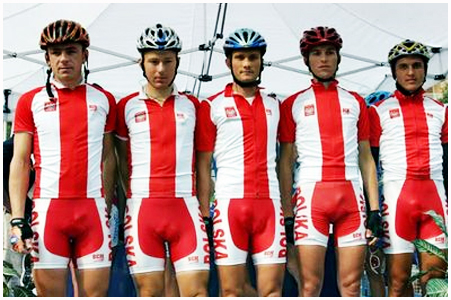
The MAMILs have a job to do - ditch the Lycra!

Love this. Courtesy of my friends at Love Your Bike and via the excellent online news site road.cc, I've encountered the marvellous concept of MAMILs (or middle-aged men in Lycra).

Basically the idea is that there's major growth in cycling amongst men of a certain age who, instead of turning to a Porsche or a Harley Davidson as they lurch headlong into their midlife crisis, are buying a high-end bike, peeling on some crotch-hugging Lycra leggings, and then getting out on the road.

The findings are part of a report released in June from Mintel. Amongst the 'highlights' in the report are the fact that the keenest cyclists are most likely to have at least two cars in their household, they're also broadsheet readers and are likely to have an average household income of over £50,000.

And they're mostly blokes. Middle-aged blokes.

So far, so almost fascinating. My own hugely comprehensive survey on the streets of Manchester is that there are a growing number of cycling 'typologies' of which we should be aware:

FFOPs - Floaty Frock on Pashley. This new subset of cyclist is a bloody breath of fresh air. Normal clothes, elegant bike and generally higher regard for the little things like red lights, not mowing down pedestrians and being generally courteous.

NOAF - Nutter on a Fixie. You know who I mean. They're not in Lycra. They're in black skinny jeans. Anarchists on two wheels for whom no piece of roadspace is too tight a squeeze. Love their bikes though. Yum.

BBOYS - BMX with Bumcrack. Why these students are 'commuting' along Oxford Road on those tiny little stunt bikes is beyond me. Apart from the constant flashes of bottom, equally amusing is their insistence in overtaking you whilst frantically peddling their teeny little wheels only to slow down horribly once you hit a straight patch of road. Bless.

Anyway, back to those MAMILs. I've got a problem here. First of all, like my wife I think that Lycra is a privilege and not a right; lots of these boys are NOT equipped to be wearing Lycra and should steer well clear. Furthermore there is a central issue about making all cyclists look like refugees from the Tour de France.

We have to normalise cycling. It's critical! I think those of us for whom cycling is our daily preferred mode of travel have a moral duty, which I would set out as follows:

1. Look normal. Do not wear Lycra and where possible avoid performance clothing. It looks ugly, and sends out a subliminal message to the rest of the world that cycling is an extreme sport. It is not, it is the best way to get from A2B and the weirder we make it look, the less likely people are to join us in the saddle. Grow up, and stop dressing up.

2. Be super-courteous. We should be the very opposite of Lycra banditos and instead be the lovely, lovely knights and knightesses of the road. Let the bus out! Make way for that driver! Stop and give someone directions! And of course, stop at red lights.

3. Embrace elegance. Here of course I'm following a well trodden path set forth by the excellent people at The Tweed Cycling Club and outlets like Rapha. We should make cycling aspirational, desirable and the mode du jour! Now if I could just afford that Timothy Everest jacket, I'd be away. Must also figure out the etiquette of pipe-smoking whilst cycling.

Mintel are right to highlight the MAMIL but rather than jibing at him, he should be challenged, to become an ambassador for cycling, on a mission to get more people peddling. And he could start by choosing to cycle to work, and do so in a way that makes the whole thing seem fashionable, safe and not requiring the donning of an outfit that makes you look like you're either about to jump down a luge run or storm the Death Star.

I'm thinking plus fours and a natty cap might do the trick.

Monday, 16 August 2010

Brand Hell

Just stumbled, thanks to the Twitter feed of @antonvowl, upon a genuine glimpse of what hell might look like. The Daily Mail and Internet Explorer, fused together like two dark, sinister and dastardly siamese twins. IE8 customised for the Mail Online. Genuinely hurts my head, this one.

In fact, it's got me wondering if Satan is actually walking amongst us, running an FMCG brand and marketing company (not that hard to imagine) working up evil brand synergies to unleash upon us all.

Next up? How about Jeremy Clarkson's own brand line of foie gras pâtés? And isn't it about time they brought out a Blackberry with an in-built taser? More suggestions please, and I'll pass them onto the fallen one.

Sunday, 8 August 2010

Factor Four for Greater Manchester

Have got myself worked up over the last few days about the notion of a radical eco-efficiency programme for Greater Manchester's local authorities, all carried out in the interest of protecting public services... Basically a Factor Four programme for the city region. Given the possible scale of such an effort, it could save millions, but would have to be ruthless in the pace it set and uncompromising in terms of challenging bureaucracy.


Tuesday, 3 August 2010

Da Gryptions - The Bixi Anthem

This is so brilliant I've had to watch it twice. They even rapped 'carbon footprint'! Amazing.

Sunday, 4 July 2010

Mersey Forest takes to the sky...


Had to share this one - a really cute story. We staged a press launch and photocall last week at the Mab Lane Community Woodland for the Mersey Forest and Forestry Commission. My colleagues were there at the break of dawn, inflating (biodegradable) balloons with tags attached full of wildflower seeds.

It was the one and only rainy morning of the week, predictably, but even so more than 30 children from St Brigids, St Albert’s RC and Mab Lane Primary School released the biodegradable balloons filled with wild flower seeds into the air to help plant vibrant patches of wild flowers right across the region and beyond.

The exciting thing came when this appeared on the woodland's blog site:

"I’m a teacher at Highfield Hall Primary School in Chesterfield, Derbyshire. One of the Nursey children I was teaching bought a big bunch of colourful balloons in, having found them on her way to school. The children are going to be planting them on Monday. The Nursery children were very excited and interseted in the story behind the balloons and can’t wait to plant the seeds. What a lovely idea!!"

So our balloons flew up into a soggy sky and made it 66 miles at least. Totally lovely.

The event was staged to mark the completion of the planting of 20,000 new trees to create the Mab Lane Community Woodland on two former brown field sites in West Derby as part of The Mersey Forest.

Tuesday, 22 June 2010

Winning with ENWORKS


Dead chuffed that we've won the contract to deliver communications support to the marvellous people at ENWORKS, the Northwest’s award-winning environmental business support service.

After pitching against a bunch of other agencies (there's some serious and talented competition out there by the way) we've won the three-year contract to help improve the competitiveness and productivity of Northwest businesses by building ENWORKS’ profile, regionally and further afield.

We've been lucky enough to work with ENWORKS before, as they've been going strong since 2001, and have helped more than 10,000 companies to date. ENWORKS is now a leading authority on environmental business issues, providing free support for businesses to become more profitable by reducing their use of CO2, water and materials.

Anyway we think they're fab and it's great to be working with them again. The YouTube clip above is an example of one of our previous campaigns for them, which did not involve harm or injury coming to the businessman involved. Honest.


Wednesday, 16 June 2010

There is an alternative

We've just released our film for Cooperative Fortnight called 'There is an alternative'. We had luminaries from a host of cooperatives come into the studio for the shoot, and I'm dead chuffed with the outcome.

Friday, 4 June 2010

Driving out into a digital age


This is me: I'm a geeky, early adopting cyclist. Love tech, hate cars.

The former is the future, the latter is the smelly, polluting past. Which is why I've got myself in a frothy little lather about a posting on the eminent and fabulous Streetblog in the States. The piece, by Sarah Goodyear, follows up an earlier article in Ad Age about young Americans driving less as they become ever more seduced by the tippity-tap texting and Twittering of the digital age.

The proposition is that a recent decline in registered drivers amongst younger people is coming about as 'the younger generation increasingly sees a wired lifestyle as incompatible with a motorized one'. Quoting one pundit in Ad Age, Streetblog sets out the case:

"William Draves blames the Internet. Mr. Draves, president of Lern, a consulting firm which focuses mainly on higher education, and co-author of "Nine Shift," maintains that the digital age is reshaping the U.S. and world early in this century, much like the automobile reshaped American life early in the last century.

"His theory is that almost everything about digital media and technology makes cars less desirable or useful and public transportation a lot more relevant. Texting while driving is dangerous and increasingly illegal, as is watching mobile TV or working on your laptop. All, at least under favorable wireless circumstances, work fine on the train. The Internet and mobile devices also have made telecommuting increasingly common, displacing both cars and public transit."


Now, I know the reality of some 'tech' on public transport (such as upstairs on the number 86 from Chorlton) is a yoof playing hardcore rap through the tinny speaker on his Nokia rather than elegant young metropolitans Twittering about Derrida but hey, there's something here that's hugely uplifting, not least because so much of this frenzied 'thumb action' is about connections, communications and social media.

Tune in, switch off and buy a ticket. Fabulous.