Had a great meeting in Wigan today with the nice folks at Northwest Environment Link. I was pitching up with my woodland creation manifesto, the latest version of which you can click through to below. Select 'menu' in the viewer window below and 'full screen' to get full benefit of the marvellous Slideshare.

Tuesday, 11 May 2010


Thursday, 22 April 2010
More food... more urban greening

There's a theme developing this afternoon, it's all about food. Have just come across a brilliant scheme outlined in Fast Company magazine, courtesy of my good friend Adam Lubinsky at URS Corporation. The project is a really exciting new rooftop farm in Brooklyn which opens imminently, is powered by photovoltaics, collects rainwater for irrigation and will see its produce delivered, by bicycle, to a number of outlets including Whole Foods. If stuff like this doesn't convince you that the world can be saved, nothing will. Totally fabulous.
Urban food AND bikes!!!

Find more photos like this on MetaboliCity
This is how to totally get me wound up and excited - urban food growing which explicitly references green infrastructure AND which has a load of bikes thrown in for good measure. Totally brilliant stuff from Metabolicity.
Monday, 19 April 2010
Dwight Towers on academics
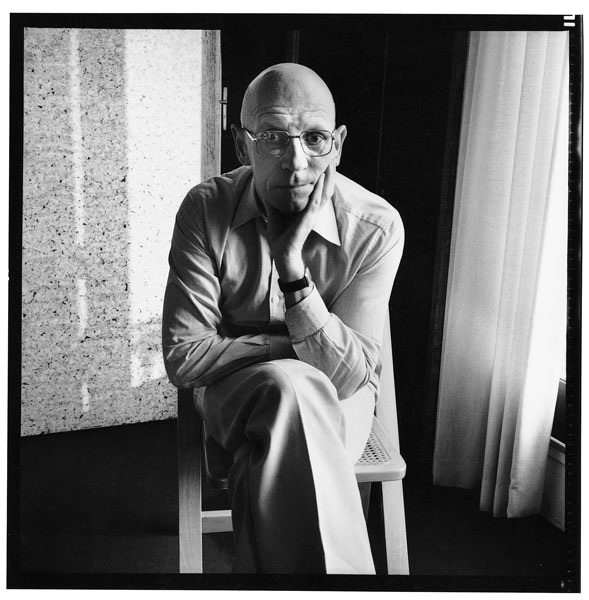
Okay, I'm married to an academic and she is the absolute fulcrum, focus and filigree of my life, but I had to pass on the wise, wise words of Manchester's very own Dwight Towers. In the latest DT blog post there is a rip-roaring sideswipe on academics, citizen participation in Manchester and on the journey you'll encounter Foucault's notion of 'governmentality'. All I can say is that it is a fine way to start the week and gives me an excuse to use a picture of Michel Foucault.
Sunday, 4 April 2010
Hide and seek, at Brockholes

We recently finished a new brand for the exciting ‘Brockholes’ project, a Lancashire Wildlife Trust plan to create a new £8.6 million nature reserve and visitor centre on the site of a former gravel works just outside Preston. The project is being funded, to a large degree, by the Newlands programme which we’ve worked on for a number of years now for the Forestry Commission and NWDA.

We’re proud of our work on Brockholes - led by our senior designer Helen Thomas. It’s a pretty extensive brand work-up, stretching through to retail, interpretation, ‘play’ and the tone of voice of the people that will meet and greet when you visit the 106 hectare complex from Spring 2011.
We’ve liaised closely with the architect Adam Khan whose ‘Floating World’ design is genuinely inspirational and we’ve done loads of research, both on comparator brands and the brandscape, as well as focus groups with the target audiences for this ‘unreserved reserve’.

We’ve opted for a monochrome palette to reflect the Wildlife Trust brand and the word Brockholes is supported by a lexicon of spot words, which show some of the fun things you can do. The whole thing comes together as if visitors themselves had been involved in the creation of the site; as if they doodled Brockholes up out of the disused quarry next to the M6. This will be extended, we hope, to invitations to interact across the site, with black and white internal walls that come to represent giant blackboards – with fun headlines supplemented by chalk or charcoal so that adults and children alike can leave their mark.
Tuesday, 30 March 2010
The City Region Project
Last night the world shifted, a little. Stockport joined the other nine local authorities across Greater Manchester and agreed to establish a combined authority for the ‘city region’ of Manchester.
I know, it sounds like a mouthful, and that’s even before you start talking about ‘Economic Prosperity Boards’ or ‘Agglomeration Economies’.
Put simply the Combined Authority is a permanent and statutory body that has powers over some fairly major issues like transport, planning, regeneration, skills and employment. Critically it will also (hopefully) make sense of Greater Manchester’s work on tackling climate change and creating a low carbon economy.
We don’t get the fun and games of an elected Mayor, which I’m a little disappointed at, given that such a figure would, to my mind, give us more ‘punch’ nationally and internationally. Instead we’ll get a slight reshuffling of AGMA deckchairs to create a city region executive (stay awake at the back there!).

But that last point is critical. This has to boost the transparency of power.
If I’m honest, I think the workings of AGMA (the Association of Greater Manchester Authorities) to date have been related to the world at large with all the compulsion and flare of an incarcerated scoundrel scratching out days on the wall of his cell. Either that or a narcoleptic let loose with a word processor. Dig deep into the bowels of the web and you will find AGMA minutes, impenetrable research reports, crunchy and badly rendered maps.
You won’t find anything exciting. Trust me.
So that’s what we need to pull off now. We need to make this next great phase for the city Disraeli described as ‘the most wonderful of modern times’ a compelling, high profile tour de force. It needs to set the world alight. It needs to set a different model for our future prosperity.
Most importantly it needs to communicate. If it’s back to somnambulant business as usual, I’m off the bus.
Monday, 29 March 2010
Co-operating on carbon in Moss Side
A few years ago we (Creative Concern and chums) launched Manchester is My Planet to generally positive noises nationally and regionally; the key to the whole endeavour was the very simple idea that a big, hairy, global problem like climate change possibly could be solved if you made it local, relevant and fused to a greater sense of civic pride. Later on this was an approach which we also adopted when helping to get Foundation launched.
It's a straighforward bit of thinking: climate change and melting planet - very scary - can result in paralysis through fear and dispair - not good! Local action, down your street, by people you recognise is not scary but really 'do-able'. People not scared. People empowered. Planet saved.
That's the theory, and I reckon it's sound.
 Anyway the latest outing for this thinking is the fabulous new Carbon Co-op in South Manchester (more specifically Moss Side). The idea is a new, low carbon social enterprise that helps neighbourhoods co-operate to save energy and money. The Co-op launched on Saturday and will kick off across two Moss Side streets with residents working together on bulk-buying low carbon technologies, insulation, energy monitors and other such green gizmos.
The Carbon Co-op is being supported by NESTA's Big Green Challenge Fund and Manchester City Council's Carbon Innovation Fund and it includes a very good 'manual for living' that I'd recommend to anyone. Having tried on many an occasion to make climate change palatable, understandable and compelling on the printed page, I love to see it done well, and right. The project has a bunch of other people I respect involved, including one of the team behind 'Wythenshawe Forever' (Jonathan Atkinson) and the brilliant Charlie Baker from Urbed.
It's a straighforward bit of thinking: climate change and melting planet - very scary - can result in paralysis through fear and dispair - not good! Local action, down your street, by people you recognise is not scary but really 'do-able'. People not scared. People empowered. Planet saved.
That's the theory, and I reckon it's sound.

The Carbon Co-op is being supported by NESTA's Big Green Challenge Fund and Manchester City Council's Carbon Innovation Fund and it includes a very good 'manual for living' that I'd recommend to anyone. Having tried on many an occasion to make climate change palatable, understandable and compelling on the printed page, I love to see it done well, and right. The project has a bunch of other people I respect involved, including one of the team behind 'Wythenshawe Forever' (Jonathan Atkinson) and the brilliant Charlie Baker from Urbed.
Tuesday, 16 March 2010
Can culture (help to) save the world?
Can culture help to save the world? That was the theme of a presentation I gave this week to Renaissance Northwest, the collective of museums, galleries and libraries across England's Northwest.
Monday, 8 March 2010
Clean city and the purpose of communications

It always pays to pick up an old, but trusted, book and remind yourself that stronger and more experience minds have wrestled with critical philosophical questions time and again; they may even have pinned down an answer or two. So I’m back with Raymond Williams, the man who shaped 1960s Cultural Theory. His 1962 book ‘Communications’ is helping me to shape some of my thinking about what our business, communications, is for, in the light of the current (overdue) debate about new economic models and prosperity without growth. Here are some of his opening words in the book, and as you’ll see, they have stood the test of time:
“In our own generation, there has been a dramatic tightening of interest in this world of communications. The development of powerful new means of communication has coincided, historically, with the extension of democracy and with the attempts, by many kinds of ruling group, to control and manage democracy.”
Critically, Williams goes on to assert that society and communications are one in the same:
“We have seen the central concerns of society as property, production and trade. These approaches remain important, but they are now joined by a new emphasis: that society is a form of communication through which experience is described, shared, modified and preserved.”
Williams also continues to state that modern communications has already (in the 60s) been abused for political control as propaganda and for commercial profit as advertising. It is this last point, the sense that communications has been abused through advertising for commercial gain, that is particularly powerful and appropriate for anyone getting their head around the question of what design, (social) marketing, public relations and communications is for. For me, what Williams is stating is the notion that communications, a powerful and creative shared conversation across society, has become synonymous with ‘selling stuff’ only as a direct result of its capture by capitalism. Extend this line of enquiry and reflect back to Williams’ assertion that society and communications are in unity, and the conclusion is a powerful one:
“Our commonest economic error is the assumption that production and trade are our only practical activities, and that they require no other human justification or scrutiny. We need to say what many of us know in experience: that the life of man, and the business of society, cannot be confined to these ends; that the struggle to learn, to describe, to understand, to educate is a central and necessary part of our humanity.”
There’s currently plenty of debate around what prosperity post-crunch should actually represent in our society and the idea that seeing economic activity as being our singular measure of progress is, to cut to the chase, barking mad. Williams’ fifty year-old declaration that communications is for something other than chasing profits and consumption fits right into this dialogue; it could almost have been drafted in the last twelve months rather than in the early 60s.
One thing that is powerful about Williams’ critique is that it is directed at the process and practice of communications itself, rather than more narrowly at the corporations that are driving communications or the consumers who are the recipients of their cajoling gaze. It was in a discussion with Jai from UHC last year, that I finally came to the conclusion that for too long the critique of advertising has focused on and ridiculed the consumer, rather than the creators of the ad or the promo. Adbusters is a good case in point here. Great creative, powerful analysis, but in their ‘Obsession’ or ‘McGrease’ culture jamming ads for example I can’t help but feel it is the consumer and not the superstructure of international marketing communications that is being deconstructed and ridiculed.
So perhaps it’s time to take the battle to the doors of the ad agencies and the marketeers. I’m still thinking and working this through, and tossing around the idea of the ‘Polluter Pays’ principle as applied to advertising, but one example of pro-active action does stand out: the Clean City Law of Sao Paulo.
In 2007 the mayor Gilberto Kassab was on a mission to remove the city of visual clutter. This, the fourth-largest city in the world, was to made beautiful as part of a Clean City Law. It was a bold programme and it included a push to remove virtually all visual advertising from the city. The idea was to let the city and green space and natural scenery take a higher level of prominence rather than ads for cars, knickers and consumer goods.
The advertisers did not go willingly, dragging their heels and getting slapped with an $8 million fine in the process, but as contemporary images of Sao Paulo show (such as those by the documentary photographer Tony de Marco), the city has been scrubbed clean of advertising clutter, and the result is not a Soviet-style denuded city of faceless buildings and lifeless streets. The programme has worked thusfar and has been met with some approval, with surveys showing seven out of ten residents happy with the new law.
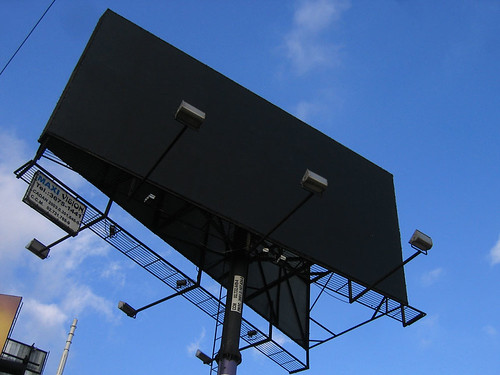
Tony de Marco’s photography does show one strange outcome of the law - the billboards and supporting structures still remain even thought he shrill call to BUY BUY BUY has been removed, leaving a ghostlike remembrance of the art of selling hanging over the city like some angels in a Herzog movie. I don’t know if this is the outcome I’d be after.
Going back to Raymond Williams, if communications is one with society, and if it could just as importantly be an alternative force “through which experience is described, shared, modified and preserved,” then surely there should be a case not simply for a comprehensive teardown of the billboards but of a shared space where society gets some of its mental space back. Imagine ‘folk advertising’ that shared recipes for jam, DIY tips or the very latest available on Freecycle; imagine a new platform for emboldened social marketing that promoted health, sustainability or tolerance; imagine simply setting these spaces over to art and creativity.
If communications is society’s shared conversation, and it has been all about consumerism until now, then let’s shift the topic, and talk about something new, and better.
Saturday, 27 February 2010
A Forestry Manifesto for England’s Northwest

And then imagine asking them to make it a beautiful and inspiring object too, one that created a wildlife habitat and pollution filter, to boot, an object that made virtually every human being feel happier.
Trees – they hold so many answers. Which is why it’s time in our region to make much more of forestry and woodlands.
I chair the Forestry Framework for England’s Northwest and, this week, had my tenure renewed for two more years. More importantly, I presented and had accepted a shared manifesto for forestry across the region that will set a clear target for planting more trees: we want to double woodland cover within a generation - by 2050. See the post below for the presentation I gave on Thursday.
Our manifesto is shaped around seven points, with woodland creation as a starting point:
TREES
We will radically increase tree planting and double woodland cover.
CITIES
We will bring a cool green revolution to our towns and cities.
CARBON
We will play a major part in tackling climate change.
WOOD
We will produce more timber and use more timber.
JOBS
We will support green jobs and sustainable skills.
HAPPINESS
We will help to create healthier and happier communities.
BEAUTY
We will transform our region’s image, from the field to the city.
These are the seven points that embrace our region’s singular opportunity: to place trees and woodland centre stage in our region’s future. We want to double our regional woodland cover by 2050 and in the process deliver a greener, lower carbon and more prosperous future to forthcoming generations.


...to double our region’s woodland cover.
Northwest Forestry Framework - The Manifesto
This is my presentation from Thursday this week to colleagues from the Northwest's Forestry Framework - our plan is to double woodland cover, secure millions of tonnes of carbon AND create more green jobs.
Sunday, 31 January 2010
Communication responsables...

There's always a chance that some monolithic, multinational, boring, über-agency will stomp in and promise the world, but our network of creative, smaller agencies with a strong record on transport and the environment, has to be a winner.

We're thinking about formalising our network into something more high profile, structured around the notion of 'communication responsables', a French-born approach to sustainable communications which I'm busy learning about and which it would do no harm to bring to a wider audience in the UK. Core principles include transparency and honesty; it also appears to be a direct attempt to block ever higher levels of greenwash on the part of major corporates. More anon.
Tuesday, 19 January 2010
Covering up for the Whitworth

The new wallpaper exhibition at the Whitworth - Walls Are Talking - launches in February and our team at Creative Concern have been hard at work designing the promo campaign for the show, which we’re really proud of.
Walls Are Talking is the first exhibition of its kind in the UK, featuring wallpapers by more than 30 internationally known artists including Andy Warhol, Damien Hirst and Niki de St. Phalle. Already well known for its wallpaper collection, the Whitworth is pulling together a genuinely challenging show and we knew that the campaign to promote it had to be every bit as edgy.
We worked with the City’s Creative Director, Peter Saville and photographer Graeme Cooper to produce the artwork, which directly responds to some of the core themes that the exhibition explores: subversion, sexuality and imprisonment.

Wallpaper was on my mind over Christmas actually, when I listened again to Stephen Fry’s ‘blessay’ on aesthetics and Oscar Wilde. In the podcast he recounts the time when Wilde was asked his view of the United States, famously responding that the reason that the US was such a violent, brutal place was because its wallpaper was so ugly.
As Stephen Fry then draws out, this is typical wildean flippancy at first hearing but actually stems from a deep belief in aesthetics and, critically, in the aesthetics of the everyday. It is the notion that if we care about design and quality and beauty then it will lift the spirits, enrich the human condition, make the world a better place.
Which is one reason why I’ll be just as focused on the Whitworth’s huge collection of ‘everyday’ wallpapers spanning several centuries, as well as the pieces submitted by the big name artists. Good design, and beauty, is something we should encounter from the moment we wake until the moment we finally stop Twittering and nod off to sleep.
And everyday aesthetics - finally - takes me back to one of my great Whitworth moments. The gallery has always been one of my favourites spaces, for over 20 years now. When I was a student I was there often, and one day a huge school group arrived to fill in work sheets, make some drawings and chatter their way through the galleries. As they emerged into the space, confronted by the rich collection of work, one of the children looked down, not up, and belted out the most lovely refrain: “What a beautiful floor!”
_
Walls Are Talking opens on February 6 and runs until May 3 and is collaboration with the V&A Museum. It includes specially commissioned work from artists Michael Craig-Martin and Catherine Bertola.
Monday, 18 January 2010
Green apples...

But even more than usual, I am currently a very, very happy Apple user. In the last few years, in spite of GORGEOUS machines coming out, and an ever-better operating system and the market-changing iPhone (swoon), Apple had a problem - it kept tanking in the environmental stakes. It repeatedly scored low in comparative reports between different manufacturers and so as a result became a target for campaigners; green Mac users like me kept our heads down.
Now we can take heart as Apple has topped a green computer league table published by Greenpeace. Due to innovations like the removal of PVC from cables, or that clever unibody that encases the laptop I'm typing into, Apple has emerged at the head of the league. Bloody lovely stuff.
Thursday, 14 January 2010
Love your bike... just don't take a tram

Here's a good quote for a dark and frosty winter's day, it's from Arthur Conan Doyle:
“When the spirits are low, when the day appears dark, when work becomes monotonous, when hope hardly seems worth having, just mount a bicycle and go out for a spin down the road, without thought on anything but the ride you are taking.”
Lovely... but just don't try and get on a tram when those legs get a little tired, as it looks like Greater Manchester is about to vote to continue its ban on tram-borne bikes.
It pains me to say it, but when it comes to bikes on the metro, London can do it. In fact a host of other cities can manage it. Here's just a snapshot of light rail or tram services around the world that let cyclists on board:
Vienna
Sydney Light Rail
Brussels
British Colombia SkyLink
Calgary Transit
Prague
Copenhagen Metr
Lille – Transpole
Berlin BVG
Bielefeld moBiel
Frankfurt VGF
Hannover USTRA
Munchen MVV
Nurnberg VGN
Stuttgart SSB -
Amsterdam GVB
Rotterdam RET
Charlotte LYNX
Dallas Area Rapid Transit
Denver RTD
Miami Dade County Transit
Minneapolis MetroTransit
Phoenix Valley Metro
Portland Trimet
St Louis Metro
So there you go; not impossible; which was actually the conclusion of the Greater Manchester Authorities in 2002 when they “unanimously agreed to the principle of allowing bikes on trams during non-peak hours”.
Understandably, our friends at the Friends of the Earth-run Love Your Bike campaign are not best pleased. They think that allowing bicycles to travel on off-peak trams would encourage more people to combine tram and cycle journeys for commuting, shopping and leisure, and be an effective way to reduce carbon emissions. This argument is given greater power once they point out that Greater Manchester's own transport strategy suggests that between 2 and 5 miles is a perfect cycling distance, and that around 90% of the Greater Manchester population will soon be within a 2.5 mile cycle ride of a tram (when the hugely welcome new Metrolink services are completed).
The vote on this takes place tomorrow and Love Your Bike is calling on anyone who can to urge the GMITA committee members to honour the pledge made in 2002 and vote to allow cycle carriage on off-peak cycle trams. If you fancy adding your voice, click here to send them an email.
Subscribe to:
Comments (Atom)